
CTFX Forex Help & Guides, CTFX Forex Tips & Tricks
5 Common Forex Trading Mistakes Beginners Make
May
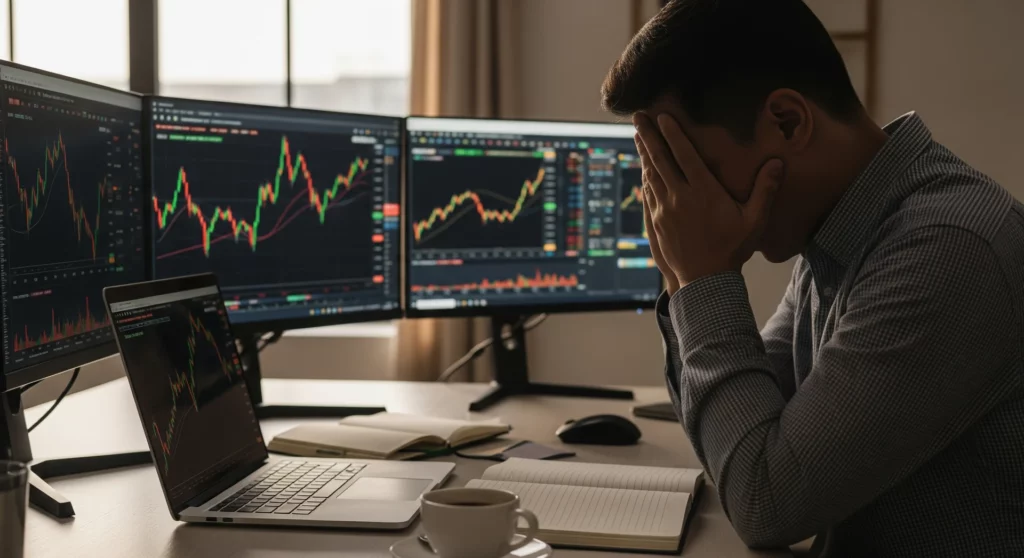
Most beginners who come to me don’t lack intelligence — they lack corrected habits. After nearly a decade mentoring retail traders through CTFX School of Trading, which I founded in Cape Town in 2017, I keep seeing the same patterns repeat. A smart, motivated person opens a trading account, loses money inside a few weeks, and walks away convinced the market is rigged against them. It rarely is. What went wrong was almost always something fixable — if they’d known what to look for.
This article walks through the mistakes I see most often, exactly how they play out in real sessions, and what you can do today to start changing the pattern.
Why So Many Beginners Lose Money in Forex
Regulated brokers operating under bodies like the FCA and ESMA are required to publish the percentage of retail clients who lose money trading CFDs and forex. The figure is consistently high — the majority of retail traders lose over time. That isn’t a secret, and it isn’t mainly because markets are unpredictable. It’s because most people enter forex with enthusiasm but without a framework for making decisions, managing risk, or handling the emotional pressure that comes with real money on the line.
Trading failure is a behavioural problem more than a knowledge problem. I’ve seen accountants, engineers, and experienced business owners blow accounts in their first month — not because they aren’t smart enough to trade, but because no one showed them which habits to build before they touched a live account. That’s the honest conversation I want to have here.
Mistake 1: Trading Without a Real Plan
This is the root cause behind most of the other mistakes on this list. When there’s no plan, every other error becomes more likely.
What “having a plan” actually means
A plan isn’t a vague intention to “follow the trend.” It means you have written, pre-defined answers to three questions before any session starts: What is my entry signal? Where does my stop-loss go? How much of my account am I risking on this trade?
Without those answers, what happens in practice is this: you open the chart, a candle closes bullish, your gut says “it’s going up,” and you click buy. That’s not trading — that’s gambling with extra steps. The market will occasionally reward it, which is actually the problem, because a few lucky wins convince you the approach is working right up until it isn’t.
The quick fix: one decision rule per session
Before you open a live or demo chart, write down one specific entry condition. It can be simple: “I will only enter a long trade if price is above the 50 EMA and the last candle closed above the previous high.” That’s it. If the condition isn’t met, you don’t trade. Sticking to one rule per session teaches you what systematic trading actually feels like, and that discipline transfers directly to more advanced strategies later.
Mistake 2: Misusing Leverage
Leverage is the feature that makes forex feel exciting to beginners, and it’s the feature that ends most beginner accounts prematurely.
Here’s how it works mechanically. Many offshore brokers popular with South African retail traders offer leverage as high as 1:500. That means with $200 in your account, you can control a $100,000 position. A 40-pip adverse move on that position size doesn’t cost you $4 — it can cost a substantial portion or all of your deposited capital, depending on your lot size. The math moves against you far faster than most people expect the first time they experience it.
The fix isn’t to avoid leverage entirely — it’s to use position sizing discipline so that no single trade can damage your account beyond what you’ve pre-decided to risk. That connects directly to the risk management section below. Leverage is a tool. A 1:500 ratio in the hands of someone without a position sizing framework is genuinely dangerous.
Mistake 3: Overtrading and Revenge Trading
What overtrading actually looks like
Overtrading usually doesn’t feel like a mistake while it’s happening. It feels like staying active, looking for opportunities, and being engaged with the market. In practice, it means you’ve taken six trades before noon because the chart kept “looking like something was about to happen.” High trade frequency almost never produces better results for beginners — it just multiplies exposure to bad decisions.
Revenge trading: the emotional spiral explained
Revenge trading is overtrading’s nastier sibling. The scenario I see repeatedly with new students goes like this: Monday morning, first trade hits its stop-loss. The emotional response is immediate — you feel like the money needs to come back, and fast. So you open a second trade, this time with a bigger lot size to recover the loss quicker. That one also loses. By noon, you’ve placed five trades, each with increasing size, and the account is down significantly more than that first stop-loss ever cost you.
That spiral is one of the fastest ways to wipe a small account. The correction has two parts. First, set a daily trade limit — three trades maximum is a reasonable starting point for most beginners. Second, implement a mandatory cool-down rule: if a stop-loss hits, you close the platform for at least one hour before even looking at the charts again. It sounds almost too simple. It works.
Mistake 4: Ignoring Risk Management
Skipping stop-losses or sizing positions too large are the two most direct routes to a blown account, and they’re both entirely preventable.
The rule I teach every beginner first is the 1–2% rule: never risk more than 1–2% of your total account balance on a single trade. On a $500 account, that’s a maximum of $5–$10 at risk per trade. That sounds frustratingly small, and that’s exactly the point. Protecting your capital in the early phase of your trading development means you stay in the game long enough to actually learn. A trader who loses 2% on a bad trade can recover. A trader who loses 40% chasing a big win needs to nearly double their remaining account just to break even.
Stop-losses are not optional. Setting a stop-loss is how you define the maximum damage before you enter the trade — it removes the emotional decision-making from the exit. If you’re trading without stops because you “don’t want to get stopped out,” what you’re actually doing is leaving the loss amount open-ended. That’s the higher risk, not the stop-loss.
Mistake 5: Learning from the Wrong Sources
The forex education space online is genuinely difficult to navigate. YouTube channels that highlight only winning trades, Discord servers selling signals with no explanation, and social-media accounts showing lifestyle content create a deeply distorted picture of what consistent trading actually looks like. The people running those accounts are often profiting from selling you the course or the signal — not from the trading itself.
The difference between those sources and structured mentorship is accountability. A signal seller has no stake in whether you understand what you’re doing — they just need you to follow the signal. A mentor’s goal is for you to not need them eventually, because you’ve built the skills and habits yourself. That’s a fundamentally different relationship, and it produces fundamentally different outcomes.
Beginners who build their foundation on signal-following also tend to be the worst prepared when a signal inevitably goes wrong. Because they never learned the underlying reasoning, they have no framework for deciding when to stay in and when to cut the loss.
How to Start Correcting These Mistakes Today
You don’t need to overhaul everything at once. Here’s a practical starting checklist:
-
Open a trading journal. Record every trade: the entry reason, the plan, the result, and how you felt during it. Patterns in your mistakes become visible within two weeks of consistent journaling.
-
Move to a demo account until you have a written plan. A demo account isn’t just for learning how the platform works — it’s where you test whether your entry rule is repeatable before risking real money.
-
Define your risk per trade before you do anything else. Write down the percentage of your account you’re willing to lose on a single trade. Stick to it mechanically.
-
Set a daily trade limit and a cool-down rule. Decide in advance how many trades you’ll take in a session, and what happens after a losing trade. Make those rules before the session starts, not during it.
-
Seek accountable, structured learning. Not another YouTube playlist — a structured course or a mentor who can see your trades, challenge your reasoning, and correct your habits in real time.
If you’ve read through this list and recognised yourself in more than one of these mistakes, that’s not a reason to feel discouraged. It means you now know exactly what to fix. That’s further than most beginners ever get.
At CTFX, our one-on-one coaching connects you directly with me, not a faceless video library. That accountability layer — having someone who can actually see your trades and call out the patterns — is what separates the students who break these habits from the ones who keep repeating them. If you’re ready to build a real foundation, explore our beginner courses or book a one-on-one coaching session at ctfx.co.za.
