
CTFX Forex Help & Guides, CTFX Forex Tips & Tricks
How to Start Trading in South Africa

Jul
Trading in South Africa and Botswana is attracting more first-time investors than ever, with the Johannesburg Stock Exchange handling over 20 trillion rand in trades each year. Most assume you need deep pockets and fancy degrees to get a foot in the door. Yet, the real surprise is how simple the first steps can be when you break it down. The difference between confusion and confident trading often comes down to choosing the right market from the start.
Table of Contents
- Choosing The Right Trading Market Locally
- Step-By-Step Guide To Opening A Trading Account
- Essential Trading Strategies For Beginners
- Common Mistakes South African And Botswana Traders Make
Quick Summary
| Takeaway | Explanation |
|---|---|
| Choose the Right Trading Market | Understand the different segments within South Africa’s financial landscape, particularly focusing on the Johannesburg Stock Exchange (JSE) and its offerings to align with your investment goals and expertise. |
| Prepare Necessary Documentation | Gather essential documents such as proof of identity, residence, tax identification number, and bank account verification to ensure compliance with FSCA regulations when opening a trading account. |
| Implement Effective Risk Management | Utilize risk management techniques, like stop-loss orders and maintaining a risk-reward ratio of 1:2, to protect your capital and reduce emotional trading mistakes. |
| Engage in Continuous Learning | Invest in ongoing education about market trends, economic indicators, and personal trading performance to enhance your understanding and adaptability in trading. |
| Adhere to Trading Discipline | Maintain a disciplined approach by avoiding emotional trading decisions and adhering to a systematic strategy, which will significantly improve your chances of success in the financial markets. |
How Do You Choose the Right Trading Market Locally?

Starting your trading journey in South Africa requires strategic selection of the right local markets. Understanding the available trading platforms and their unique characteristics is crucial for making informed investment decisions.
Understanding Local Market Structures
The South African financial landscape offers multiple trading opportunities across different markets. The Johannesburg Stock Exchange (JSE) stands as the primary platform for traders, operating five distinct financial markets that provide comprehensive investment options. These markets include the Equity Market, Equity Derivatives Market, Currency Derivatives Market, Interest Rate Market, and Commodity Derivatives Market.
The JSE provides traders with a robust platform to access both domestic and international financial instruments. By offering diverse trading opportunities, it enables investors to build sophisticated and varied investment portfolios. Traders can explore equities, bonds, derivatives, and other financial tools that match their risk tolerance and investment strategies.
Strategic Market Selection
Traders must carefully evaluate different market segments before committing their capital. The South African Futures Exchange (Safex), a subsidiary of the JSE, offers two critical divisions for strategic trading:
- Financial Markets Division: Specialized in trading equity derivatives, providing sophisticated financial instruments for experienced traders.
- Agricultural Markets Division: Focused on agricultural derivatives, offering unique opportunities for traders interested in commodity-based investments.
Careful market selection involves understanding your personal financial goals, risk appetite, and trading expertise. Beginners might prefer starting with more stable equity markets, while experienced traders could explore more complex derivative trading strategies.
Navigating Regulatory Considerations
Trading in local markets requires compliance with South African financial regulations. The Financial Sector Conduct Authority (FSCA) oversees market operations, ensuring investor protection and maintaining market integrity. Traders must register with authorized platforms and understand regulatory requirements before initiating their trading activities.
Key considerations include understanding tax implications, registration processes, and minimum investment requirements. Each market segment has specific entry barriers and regulatory guidelines that traders must carefully navigate. Consulting with financial advisors or attending professional trading workshops can provide valuable insights into these complex regulatory landscapes.
Successful local trading demands continuous learning, strategic planning, and a deep understanding of market dynamics. By selecting the right market, understanding regulatory frameworks, and developing a robust trading strategy, investors can maximize their potential for financial growth in the South African trading ecosystem.
To help you understand the structure of major markets available through the JSE and Safex, here’s a table summarising their key features and target participants:
| Market/Division | Main Focus | Suitable For | Example Instruments |
|---|---|---|---|
| JSE Equity Market | Shares in listed companies | Beginners & Experienced | Stocks, ETFs |
| JSE Equity Derivatives Market | Equity-based derivatives | Experienced | Futures, Options |
| JSE Currency Derivatives Market | Currency trading | Advanced traders | Currency futures/options |
| JSE Interest Rate Market | Debt instruments | Intermediate & Experienced | Bonds, Interest rate futures |
| JSE Commodity Derivatives Market | Commodity-based derivatives | Intermediate & Advanced | Agricultural futures/options |
| Safex Financial Markets Division | Equity derivatives | Experienced | Index futures, Single stock futures |
| Safex Agricultural Markets Division | Agricultural derivatives | Those interested in agriculture | Maize, Wheat, Sunflower futures |
Step-by-Step Guide to Opening a Trading Account
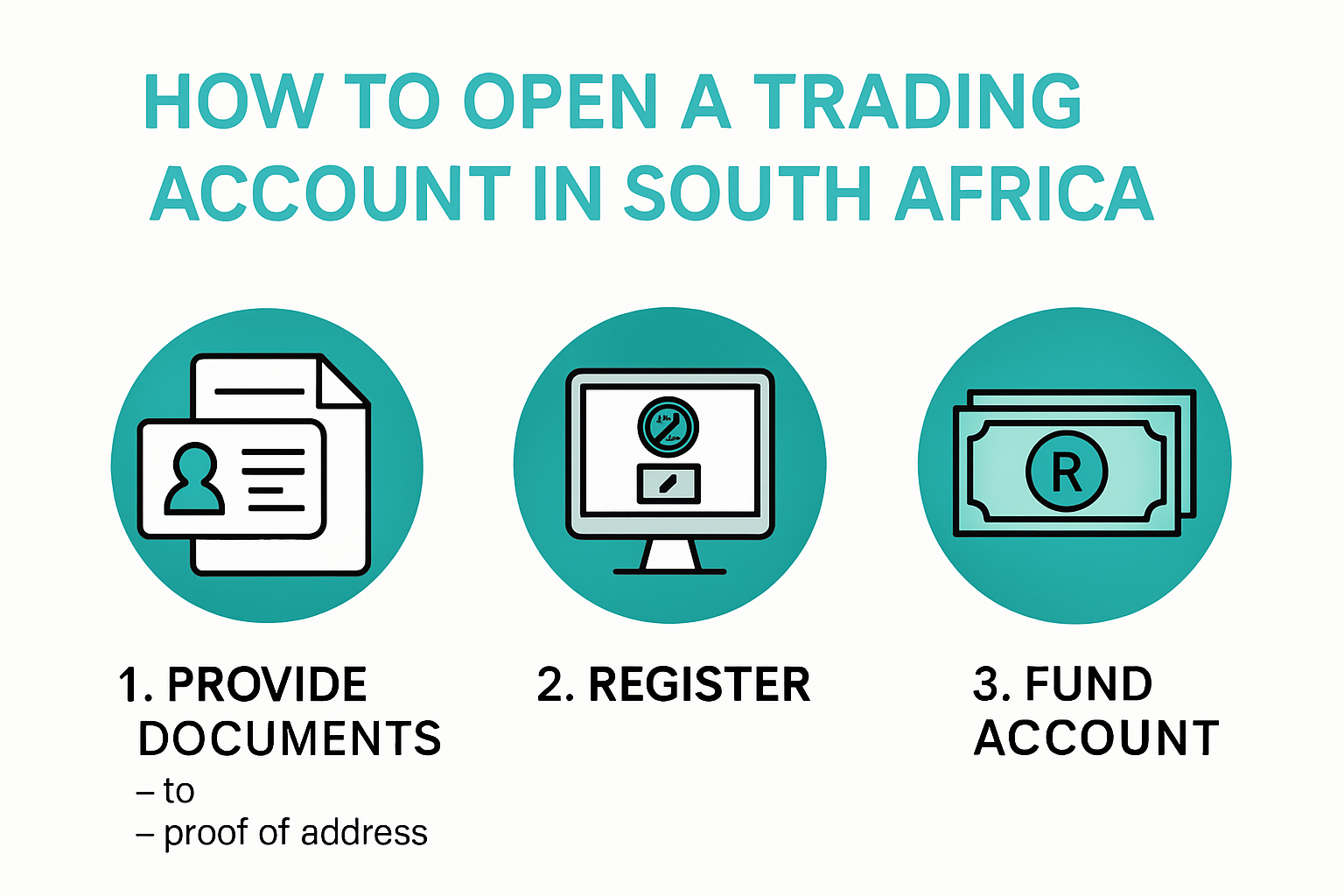
Opening a trading account in South Africa requires careful preparation and understanding of the necessary documentation and regulatory requirements. This comprehensive guide will walk you through the essential steps to establish your trading presence in the local financial markets.
Preparing Required Documentation
Before initiating your trading account, you must gather crucial personal and financial documents. The Financial Sector Conduct Authority (FSCA) mandates specific documentation to ensure regulatory compliance and investor protection. Essential documents typically include:
- Proof of Identity: A valid government-issued identification document or passport
- Proof of Residence: Recent utility bill or official address verification document (not older than three months)
- Tax Identification Number: Your South African tax registration details
- Proof of Bank Account: Bank statement or confirmation letter from your financial institution
Accurate and complete documentation is crucial. Incomplete or incorrect paperwork can significantly delay your account opening process and potentially compromise your trading capabilities.
Selecting the Right Trading Platform
Choosing an appropriate trading platform is fundamental to your investment journey. The Johannesburg Stock Exchange (JSE) recommends working with registered brokers who provide comprehensive trading services. Consider the following factors when selecting your trading platform:
- Regulatory Compliance: Ensure the platform is registered with the FSCA
- Trading Fees: Compare commission structures and transaction costs
- Platform User Experience: Evaluate the ease of use and available trading tools
- Customer Support: Check the quality and accessibility of client support services
Many brokers offer comprehensive trading courses to help new traders understand platform navigation and trading strategies.
Account Verification and Funding
Once you have selected a trading platform, the verification process begins. According to the JSE’s trading regulations, the account opening typically involves the following steps:
- Complete the online registration form with accurate personal information
- Upload required documentation for verification
- Wait for the broker’s compliance team to review and approve your application
- Link your bank account for fund transfers
- Make an initial deposit to activate your trading account
The JSE operates trading hours from 9:00 am to 5:00 pm on weekdays, excluding public holidays. New traders should familiarize themselves with these operational timelines to optimize their trading activities.
Trading is a sophisticated financial activity that requires continuous learning and strategic planning. By following these steps meticulously and maintaining a commitment to understanding market dynamics, you can establish a solid foundation for your investment journey in South Africa’s financial markets.
The following table breaks down the essential steps and requirements for opening a trading account in South Africa, serving as a quick checklist for new traders:
| Step | Requirement | Notes |
|---|---|---|
| Registration | Online form with personal details | Ensure information matches documents |
| Document Submission | Proof of ID, residence, tax number, bank proof | Documents must be recent and accurate |
| Broker Verification | Broker reviews submitted documents | May take several business days |
| Linking Bank Account | Provide bank account details | For deposits/withdrawals |
| Initial Deposit | Meet broker’s minimum funding requirement | Varies by broker |
| Account Activation | Ready for trading once approved and funded | Trading hours: 9am–5pm weekdays |
Essential Trading Strategies for Beginners
Navigating the complex world of trading requires a solid understanding of fundamental strategies that can help protect your investments and maximize potential returns. For beginners in the South African market, developing a robust trading approach is crucial for long-term success.
Understanding Market Trends and Analysis
Successful trading begins with comprehensive market analysis. Trend trading emerges as a fundamental strategy for new traders. This approach involves identifying and following the direction of market momentum. Traders learn to recognize uptrends and downtrends, making informed decisions about when to enter or exit positions.
The Johannesburg Stock Exchange (JSE) recommends developing a systematic approach to market analysis. This involves:
- Technical Analysis: Studying price charts and historical market data
- Fundamental Analysis: Examining economic indicators and company performance
- Sentiment Analysis: Understanding market psychology and investor behavior
Beginners can enhance their skills by exploring comprehensive trading courses that provide in-depth market analysis techniques.
Risk Management Techniques
Risk management stands as the cornerstone of successful trading. According to Business Tech, implementing effective risk management is critical for protecting your investment capital. Key strategies include:
- Stop-Loss Orders: Automatically selling an asset when it reaches a predetermined price
- Position Sizing: Carefully calculating the appropriate amount to invest in each trade
- Diversification: Spreading investments across different markets and assets
- Risk-Reward Ratio: Ensuring potential gains outweigh potential losses
Experts recommend never risking more than 1-2% of your total trading capital on a single trade. This approach helps preserve your investment and provides a buffer against potential losses.
Advanced Entry and Exit Strategies
Breakout trading represents a sophisticated strategy for more confident beginners. This approach focuses on identifying and capitalizing on significant price movements that break through established market levels. The key is to:
- Identify support and resistance levels
- Wait for a confirmed price breakout
- Enter trades with clear entry and exit points
- Manage potential risks proactively
Successful trading is a continuous learning process. New traders should start with small investments, practice consistent analysis, and remain disciplined in their approach. While no strategy guarantees success, a methodical and informed approach can significantly improve your chances of achieving trading objectives.
Remember that trading involves inherent risks. Continuous education, practice, and a willingness to learn from both successes and failures are essential for long-term trading success in the South African financial markets.
Common Mistakes South African and Botswana Traders Make
Trading in financial markets presents numerous challenges, especially for newcomers in South Africa and Botswana. Understanding and avoiding common pitfalls can significantly improve your trading performance and protect your investment capital.
Emotional Trading and Impulsive Decisions
Emotional trading represents one of the most destructive behaviors in financial markets. According to research from local financial experts, traders often make decisions driven by fear, greed, or panic rather than rational analysis.
Common emotional trading mistakes include:
- Revenge Trading: Attempting to immediately recover losses by making aggressive, unplanned trades
- Fear-Based Selling: Hastily selling assets during market downturns without proper analysis
- Overconfidence: Making large trades based on a few successful transactions
Successful traders learn to develop disciplined trading strategies that minimize emotional interference in decision-making processes.
Inadequate Risk Management Practices
Risk management emerges as a critical area where many South African and Botswana traders falter. The Citizen reports that traders frequently make fundamental errors in managing their investment risks:
- Overtrading: Executing excessive trades within short periods, increasing transaction costs and potential losses
- Ignoring Stop-Loss Orders: Failing to set automatic exit points to limit potential financial damage
- Risking Excessive Capital: Investing too much of their total trading capital in single positions
Experts recommend never risking more than 1-2% of your total trading capital on a single trade. This approach helps preserve your investment and provides a critical buffer against potential market volatility.
Lack of Continuous Learning and Market Understanding
Traders in South Africa and Botswana often struggle due to insufficient market knowledge and reluctance to continuously educate themselves. Successful trading requires:
- Regular market research
- Understanding economic indicators
- Staying updated with global and local financial trends
- Analyzing personal trading performance
The most successful traders view their investment journey as a continuous learning process. They maintain a growth mindset, analyze their mistakes, and consistently seek to improve their trading strategies.
Remember that trading is not about achieving perfection but about developing a consistent, disciplined approach. By recognizing and addressing these common mistakes, traders can significantly improve their chances of long-term success in the financial markets.
Every mistake is an opportunity to learn and refine your approach. Embrace challenges, maintain emotional discipline, and commit to continuous improvement in your trading journey.
Frequently Asked Questions
How do I start trading in South Africa and Botswana?
To start trading, choose the right market, select a trading platform, complete the necessary documentation, and fund your account. Understanding local regulations and market structures is also essential.
What documents do I need to open a trading account in South Africa?
You will need proof of identity, proof of residence, your tax identification number, and proof of your bank account, all of which are required by the Financial Sector Conduct Authority (FSCA).
What are effective trading strategies for beginners?
Beginners should focus on understanding market trends through technical and fundamental analysis, implementing risk management techniques, and developing a disciplined approach to trading that minimizes emotional decisions.
What common mistakes should I avoid when trading?
Avoid emotional trading, inadequate risk management practices, and the lack of ongoing education regarding market trends. Recognizing these pitfalls can significantly improve your trading performance.
Struggling to Start Trading Confidently? Let CTFX Guide You
Many new traders in South Africa and Botswana find themselves overwhelmed by complex market choices and complicated account setup requirements. If you have ever felt uncertain about South African trading regulations, misunderstood the difference between the JSE or Safex, or worried about costly beginner mistakes like emotional trading, you are not alone. Learning how to manage risks, select the right market, and apply proven strategies is challenging, especially without personal coaching.

With nearly 10 years of trading experience across forex, stocks, and cryptocurrencies, CTFX School of Trading simplifies everything for you. Our step-by-step course & coaching programme covers exactly what you read about in this guide: understanding account requirements, choosing the right platform, developing confident strategies, and building discipline. If you want a trusted South African mentor to help you turn market confusion into confident trades, visit CTFX now and take your next step. Do not wait another day when success can start with real support and easy-to-follow guidance.
Recommended
- Best Forex Trading Course & Coaching: Cape Town South Africa
- Exclusive Private Forex Course – 1-on-1 Trading Training
- Forex trading course pretoria – SA’s Best Forex Trading Course & Coaching Classes
- Forex trading course johannesburg – SA’s Best Forex Trading Course & Coaching Classes
- Forex trading course durban – SA’s Best Forex Trading Course & Coaching Classes
