
CTFX Forex Help & Guides, CTFX Forex Tips & Tricks
Beginner Forex Tips 2025: Smart Trading in South Africa

Jul
Forex trading is gaining serious momentum in South Africa and Botswana with the market running 24 hours a day, five days a week. But here’s something unexpected. Most newcomers actually lose money not from bad trades but from poor risk management and dodgy brokers. Turns out, your real profit starts with picking the right partner and learning to lose small before you even think about winning big.
Table of Contents
- Understanding Forex Trading Basics In Southern Africa
- Selecting A Trusted Forex Broker In 2025
- Essential Risk Management Tips For Beginners
- Building A Simple Forex Trading Plan
Quick Summary
| Takeaway | Explanation |
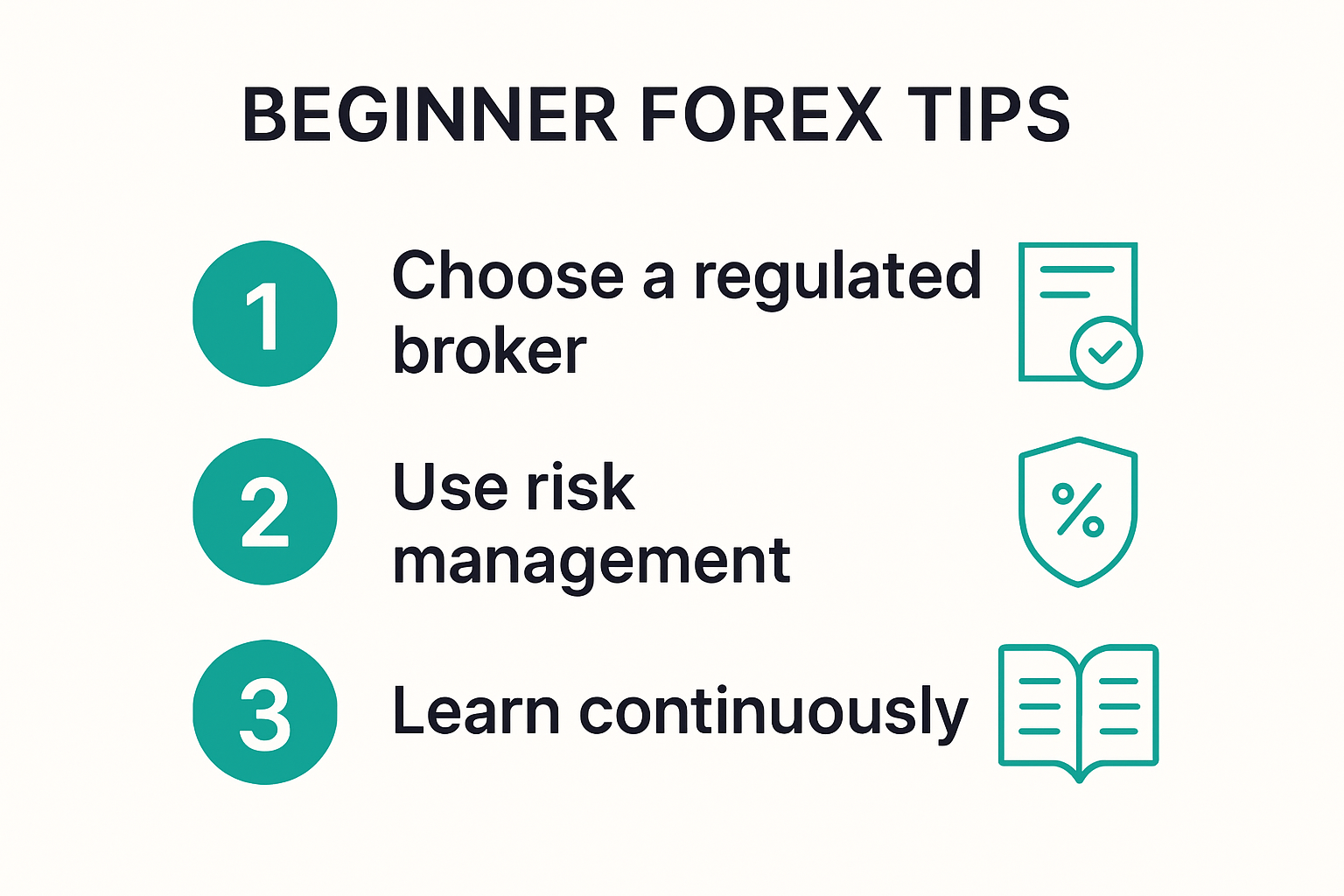
| Choose a Regulated Broker | Ensure your forex broker is regulated by the FSCA to protect your investments and maintain market integrity. |
| Implement Risk Management Strategies | Use tools like stop-loss orders and proper position sizing to manage risks and protect your trading capital effectively. |
| Develop a Structured Trading Plan | Create a comprehensive trading plan with clear goals, entry/exit criteria, and risk management protocols to guide your trading journey. |
| Engage in Continuous Learning | Invest time in educational resources and market analysis to refine your trading strategies and adapt to changing market conditions. |
What Are the Basics of Forex Trading in Southern Africa?
Forex trading represents a dynamic financial landscape in Southern Africa, offering individuals an opportunity to participate in global currency markets. The region’s unique economic characteristics make forex trading both challenging and potentially rewarding for beginners seeking financial growth.
The Fundamental Mechanics of Currency Exchange
At its core, forex trading involves exchanging one currency for another with the goal of profiting from fluctuating exchange rates. In the Southern African context, traders primarily focus on currency pairs involving the South African Rand (ZAR), which plays a significant role in regional and international markets. Learn more about advanced trading strategies that can help you navigate these complex markets.
According to research from the Financial Sector Conduct Authority, the forex market in South Africa operates 24 hours a day, five days a week. This continuous trading environment provides traders with unprecedented flexibility and opportunities to engage with global currency movements.
Regulatory Landscape and Market Dynamics
Understanding the regulatory framework is crucial for beginner forex traders in Southern Africa. The Financial Sector Conduct Authority (FSCA) provides critical oversight, ensuring market integrity and protecting traders from potential fraudulent activities. As detailed by market experts, traders must comply with local regulations and maintain transparent trading practices.
The South African Rand presents unique trading opportunities due to its inherent volatility. Factors such as global economic trends, local political developments, and commodity price fluctuations significantly impact currency valuation. Successful traders develop a deep understanding of these complex interactions, using analytical tools and market insights to make informed trading decisions.
Risk Management and Strategic Approach
Effective forex trading requires a strategic approach that prioritizes risk management. Beginners should focus on developing a comprehensive understanding of market analysis, including technical and fundamental strategies. This involves studying economic indicators, understanding global market trends, and creating robust trading plans that mitigate potential losses.
Key strategies include:
- Continuous Learning: Invest time in educational resources and market analysis
- Risk Allocation: Never risk more than a small percentage of your trading capital
- Emotional Control: Develop discipline and avoid impulsive trading decisions
The forex market offers Southern African traders a window into global financial dynamics. By combining thorough research, strategic planning, and a disciplined approach, beginners can navigate this complex yet potentially rewarding financial landscape with increasing confidence and skill.
Selecting a Trusted Forex Broker in 2025
Choosing the right forex broker is a critical decision that can significantly impact your trading success in Southern Africa. The landscape of forex trading continues to evolve, making it essential for beginners to navigate the selection process with careful consideration and strategic insight.
Regulatory Compliance and Security
The foundation of selecting a trusted forex broker lies in understanding regulatory requirements. According to research from the Financial Sector Conduct Authority, traders must prioritize brokers regulated by the FSCA. Verify a broker’s credentials with our comprehensive trading guide to ensure maximum protection.
Key regulatory considerations include:
- Verified FSCA Registration: Confirm the broker’s Financial Services Provider (FSP) number
- Fund Segregation: Ensure client funds are kept separate from operational accounts
- Transparent Reporting: Look for brokers with clear financial reporting practices
As market experts from FX Scouts explain, verifying a broker’s FSCA authorization is crucial. Traders can check the official FSCA website to validate a broker’s credentials and ensure they meet stringent regulatory standards.
Platform Features and Trading Conditions
Beyond regulatory compliance, the right broker should offer a robust trading platform with competitive conditions. Modern traders require advanced technological solutions that provide real-time market insights, user-friendly interfaces, and comprehensive trading tools.
Essential platform features to consider:
- Competitive Spreads: Low transaction costs are critical for profitability
- Multiple Trading Instruments: Access to various currency pairs and financial instruments
- Educational Resources: Comprehensive learning materials for beginner traders
Risk Management and Support
The best forex brokers go beyond basic trading functionality. They provide comprehensive risk management tools and responsive customer support. According to research from leading financial publications, top-tier brokers offer:
- Demo Accounts: Practice trading without financial risk
- Risk Management Tools: Stop-loss and take-profit features
- 24/7 Customer Support: Responsive assistance for trading queries
Traders in Southern Africa must approach broker selection as a strategic decision. It requires careful research, understanding of personal trading goals, and a comprehensive evaluation of available options. The right broker can provide the technological infrastructure, regulatory protection, and supportive environment necessary for successful forex trading in 2025 and beyond.
Remember, your choice of broker is more than a simple transaction platform. It is a partnership that can significantly influence your trading journey, offering the tools, protection, and support needed to navigate the complex world of forex trading.
To help summarise the most important factors when selecting a trustworthy broker, here is a comparison table outlining key criteria discussed above:
| Broker Selection Factor | Why It Matters | What to Look For |
| FSCA Regulation | Protects traders & ensures integrity | Verify FSP number on FSCA site |
| Fund Segregation | Keeps your money safe | Client funds separate from broker’s own accounts |
| Competitive Spreads | Reduces trading costs | Consistently low spreads on main forex pairs |
| Platform Features | Enhances trading efficiency | User-friendly interface, analytics tools, educational resources |
| Customer Support | Provides timely help | 24/7 or live support, local contact options |
| Risk Management Tools | Limits potential losses | Stop-loss, take-profit, demo accounts |
Essential Risk Management Tips for Beginners
Risk management is the cornerstone of successful forex trading, particularly for beginners navigating the complex and volatile currency markets of Southern Africa. Understanding and implementing effective risk management strategies can mean the difference between sustainable trading and potential financial loss.
Understanding Leverage and Position Sizing
Leverage is a powerful yet double-edged tool in forex trading. According to research from financial experts, traders must approach leverage with extreme caution. Learn more about advanced risk control techniques to protect your trading capital.
Key principles of responsible leverage management include:
- Limit Leverage Exposure: Start with lower leverage ratios
- Calculate Risk per Trade: Never risk more than 1-2% of your total trading capital on a single trade
- Understand Margin Requirements: Know exactly how leverage impacts your potential gains and losses
As market analysts from Vantage Markets explain, effective position sizing is crucial. Beginners should use a systematic approach to determine trade sizes that align with their overall risk tolerance and account balance.
Implementing Protective Trading Strategies
Protective strategies are essential for managing potential losses in the unpredictable forex market. Stop-loss orders represent a critical tool for traders seeking to limit downside risk. Research indicates that these orders automatically close positions at predetermined price levels, preventing catastrophic losses.
Essential protective strategies include:
- Stop-Loss Orders: Set automatic exit points to limit potential losses
- Take-Profit Levels: Establish predetermined profit-taking points
- Diversification: Spread risk across multiple currency pairs
Developing a Robust Trading Plan
A comprehensive trading plan is the foundation of effective risk management. According to expert trading resources, a well-structured plan should encompass multiple critical elements:
- Clear Entry and Exit Criteria: Define precise conditions for entering and exiting trades
- Risk Assessment Protocols: Establish systematic methods for evaluating potential trade risks
- Emotional Discipline: Create strategies to manage psychological challenges of trading
Traders in Southern Africa must recognize that risk management is not about eliminating risk entirely, but about controlling and mitigating potential losses. The most successful traders approach the market with a disciplined, strategic mindset that prioritizes capital preservation.
Remember, in forex trading, protecting your capital is just as important as generating profits. A single poorly managed trade can significantly impact your overall trading performance. By implementing these risk management strategies, beginners can build a more sustainable and potentially profitable trading approach.
Continuous learning, constant self-evaluation, and a commitment to disciplined trading are the ultimate keys to long-term success in the challenging world of forex trading.
For your convenience, the following table summarises the core risk management tactics every beginner should follow:
| Risk Management Tactic | Description | Why It Matters |
| Limit Leverage | Use low leverage to reduce risk | Protects your capital from rapid losses |
| Position Sizing | Adjust trade sizes to account balance | Ensures no single trade can wipe you out |
| Stop-Loss Orders | Set fixed loss limits per trade | Automatically limits losses |
| Take-Profit Levels | Predetermine profit-taking points | Locks in gains and maintains discipline |
| Diversification | Trade more than one currency pair | Reduces impact of a single losing position |
| Trading Journal | Record and review every trade | Helps you learn from mistakes and improve |
| Emotional Discipline | Avoid impulsive or revenge trading | Maintains consistency and reduces stress |
Building a Simple Forex Trading Plan
Creating a structured forex trading plan is essential for beginners in Southern Africa seeking consistent and disciplined trading performance. A well-designed trading plan serves as a strategic roadmap, helping traders navigate the complex and volatile currency markets with greater confidence and clarity.
Defining Trading Goals and Strategy
Successful forex trading begins with clear, realistic objectives. According to research from SA Shares, traders must define specific goals that align with their individual risk tolerance and financial capabilities. Explore our comprehensive trading strategy guide to help you develop a personalized approach.
Key considerations for goal setting include:
- Financial Objectives: Determine realistic profit targets
- Time Commitment: Assess available time for market analysis and trading
- Risk Appetite: Understand personal risk tolerance levels
As market experts explain, beginners should start by utilizing demo accounts to practice their trading strategies without financial risk. This approach allows traders to refine their techniques and build confidence before committing real capital.
Developing a Comprehensive Trading Framework
A robust trading plan requires a systematic approach to market analysis and decision-making. According to financial research, a comprehensive plan should include:
- Entry and Exit Criteria: Establish clear rules for trade initiation and closure
- Technical Analysis Tools: Select appropriate indicators and charting methods
- Fundamental Analysis Approach: Incorporate economic news and market sentiment
Traders must develop a consistent methodology for analyzing market conditions. This involves combining technical indicators, fundamental economic insights, and personal trading preferences to create a unique and reliable trading approach.
Risk Management and Performance Tracking
Effective risk management is the cornerstone of a successful trading plan. Traders should implement strict protocols for:
- Position Sizing: Determine appropriate trade volumes
- Stop-Loss Strategies: Set predetermined loss limits
- Performance Journaling: Regularly document and review trading activities
Consistent performance tracking allows traders to identify strengths and weaknesses in their trading approach. By maintaining a detailed trading journal, beginners can continuously refine their strategies and improve their overall trading performance.
Building a forex trading plan is an ongoing process of learning, adaptation, and self-improvement. Southern African traders must remain flexible, continuously educate themselves, and be willing to adjust their strategies as market conditions evolve.
Remember, a trading plan is more than a set of rules. It is a personal blueprint that reflects your financial goals, risk tolerance, and trading philosophy. Approach your forex trading journey with patience, discipline, and a commitment to continuous learning.
Frequently Asked Questions
What is Forex trading?
Forex trading involves exchanging one currency for another with the goal of profiting from fluctuating exchange rates. Traders focus on currency pairs, such as the South African Rand (ZAR) against other currencies.
How can I choose a reliable Forex broker in South Africa?
To choose a reliable Forex broker, ensure they are regulated by the Financial Sector Conduct Authority (FSCA), offer competitive trading conditions, and have good customer support. Verify their FSCA registration and assess their platform features as well.
What are the key risk management strategies for beginner Forex traders?
Key risk management strategies include using stop-loss orders, limiting leverage exposure, diversifying trades across multiple currency pairs, and maintaining a trading journal to track performance and learn from mistakes.
How do I create a Forex trading plan?
To create a Forex trading plan, define your trading goals, establish entry and exit criteria, choose appropriate technical and fundamental analysis methods, and implement risk management protocols that align with your objectives.
Ready To Trade Smarter? Your Forex Journey Starts Here
You have just learned how crucial risk management, choosing the right broker, and having a solid trading plan are for beginners in the South African and Botswanan forex landscape. Many traders lose money not because they lack skill, but because they do not have proper guidance and struggle to put proven techniques into practice. Are you tired of searching for easy-to-understand answers or feeling overwhelmed by technical jargon? The journey to confidence and profits begins with knowledgeable mentorship and practical resources easily available to you.

Take the guesswork out of your trading. Let CTFX School of Trading guide you from the basics of forex to advanced strategies, with step-by-step support and real-world insight designed for South African traders. Visit CTFX School of Trading and discover how our simple, accessible course and coaching programme can transform your results. Start building winning habits and secure your place in the next wave of successful African traders. Visit our site now and see how you can put the article’s tips into action without delay.
Recommended
- Best Forex Trading Course & Coaching: Cape Town South Africa
- Exclusive Private Forex Course – 1-on-1 Trading Training
- Forex trading course pretoria – SA’s Best Forex Trading Course & Coaching Classes
- Forex trading course johannesburg – SA’s Best Forex Trading Course & Coaching Classes
- Home – SA’s Best Forex Trading Course & Coaching Classes
