
CTFX Forex Help & Guides, CTFX Forex Tips & Tricks
How Forex Works: Simple Guide for South Africa
Jul
Forex trading is turning heads across South Africa and Botswana with its promise of 24-hour action and global currency exchange. Here is something that might surprise you. The forex market rattles through a mind-blowing daily trading volume of over $6.6 trillion, making it the single biggest financial market in the world. Yet, most newcomers still miss the real story, because understanding the rules, risks and real opportunities goes way beyond just watching the numbers jump on a screen.
Table of Contents
- Understanding The Forex Market Basics
- How Forex Trading Works In South Africa And Botswana
- Major Risks And Tips For Local Forex Traders
- Steps To Start Forex Trading Safely
Quick Summary
| Takeaway | Explanation |
| Understand the Forex Market Basics | The forex market operates 24/5, allowing traders to buy one currency while selling another, facilitating potential financial returns. Knowledge of currency pair dynamics and economic indicators is crucial for success. |
| Know the Regulatory Framework | In South Africa, the FSCA oversees forex trading, requiring traders to operate through licensed brokers to ensure protection. Botswana’s Bank of Botswana similarly promotes secure trading practices. |
| Implement Effective Risk Management | A disciplined approach to risk management is vital, including using stop-loss orders, diversifying portfolios, and maintaining consistent position sizes to mitigate potential losses. |
| Choose the Right Trading Infrastructure | Selecting a reputable, regulated broker and a functional trading platform is critical, with emphasis on compliance, transaction costs, and customer support. Beginners should practice on demo accounts first. |
| Develop a Sustainable Trading Strategy | Successful trading requires a tailored strategy that includes risk management, portfolio diversification, and continuous education, supported by clear goals and performance tracking. |
Understanding the Forex Market Basics
Forex trading represents a dynamic global marketplace where currencies are exchanged, creating opportunities for investors and traders across South Africa and beyond. At its core, the foreign exchange market operates as a decentralized global network where participants trade national currencies against one another, generating potential financial returns through strategic transactions.
What is Forex and How Does It Function?
The forex market functions as a complex interconnected system where currencies are bought and sold continuously. Unlike traditional stock markets, forex operates 24 hours a day, five days a week, spanning multiple international time zones. Learn more about trading strategies with our comprehensive approach to understanding currency movements.
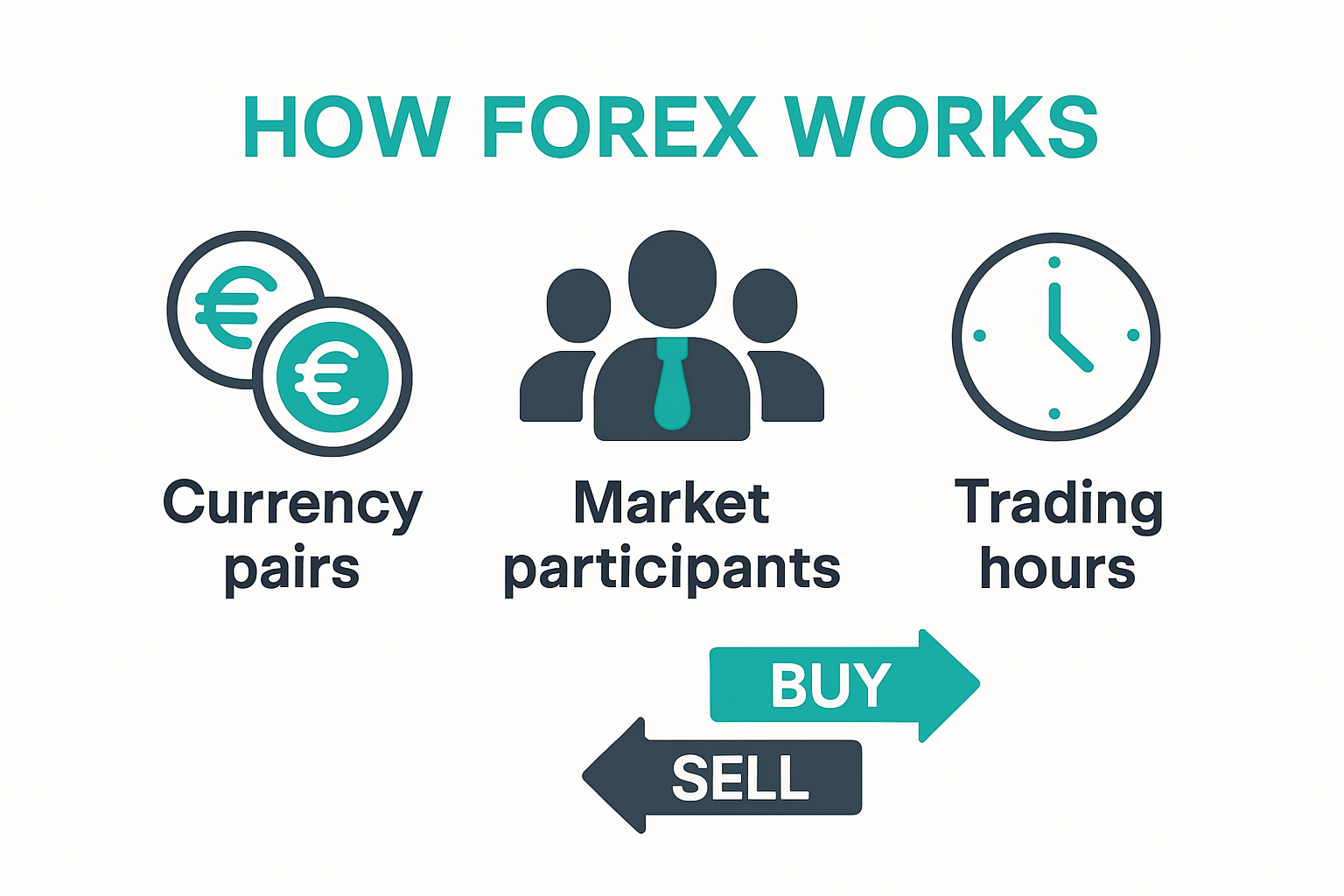
Traders participate in forex by speculating on currency pair price movements. Each transaction involves simultaneously buying one currency while selling another. For instance, when trading the ZAR/USD pair, a trader might purchase South African Rand while selling US Dollars, anticipating favorable exchange rate changes.
According to the South African Reserve Bank, the forex market’s daily global trading volume exceeds $6.6 trillion, making it the world’s largest financial marketplace. This massive scale provides significant liquidity and potential opportunities for traders willing to understand market dynamics.
Key Players in the Forex Ecosystem
Multiple participants drive forex market activity, each playing a unique role in currency exchanges. These include:
- Central Banks: The South African Reserve Bank (SARB) plays a critical role in managing monetary policy and protecting currency value. Research from SARB indicates that central banks can significantly influence exchange rates through interest rate adjustments and economic interventions.
- Commercial Banks: Major financial institutions facilitate international currency transactions, providing liquidity and executing trades for corporations and individual investors.
- Institutional Investors: Hedge funds, investment firms, and large financial entities conduct substantial currency trades, often influencing market trends.
- Retail Traders: Individual investors like yourself can access forex markets through online trading platforms, participating in global currency exchanges with relatively small capital investments.
To help you identify the different key players in the forex market and their roles, the following table summarises each participant’s core function and influence.
| Key Player | Description | Example of Influence |
| Central Banks | Manage monetary policy and intervene in currency markets | Adjust interest rates; intervene to stabilise currency |
| Commercial Banks | Facilitate large currency transactions and provide liquidity | Process forex for corporates and retail clients |
| Institutional Investors | Include hedge funds and investment firms trading large volumes | Influence market trends via major trades |
| Retail Traders | Individuals trading via online platforms | Add to trading volume and liquidity |
Understanding Currency Pair Dynamics
Currency pairs form the fundamental trading unit in forex markets. Each pair represents the relative value between two national currencies. Major pairs typically involve strong economies like the US Dollar, Euro, Japanese Yen, and British Pound. For South African traders, pairs involving the Rand offer unique opportunities.
Trading success requires understanding factors influencing currency values: economic indicators, political stability, interest rates, and global economic trends. Sophisticated traders analyze these complex interactions to make informed trading decisions.
By comprehending these foundational forex market principles, traders can develop strategic approaches to navigate this dynamic global marketplace. Continuous learning, risk management, and staying informed about global economic shifts remain crucial for sustainable trading success.
How Forex Trading Works in South Africa and Botswana
Forex trading in South Africa and Botswana has emerged as a significant financial opportunity, offering individuals and institutions unique pathways to engage with global currency markets. The regulatory landscape, technological infrastructure, and economic conditions in these countries have created a distinctive environment for forex trading.
Regulatory Framework and Market Access
In South Africa, the Financial Sector Conduct Authority (FSCA) provides critical oversight for forex trading activities. Explore our comprehensive trading resources to understand the regulatory nuances. According to research from the FSCA, traders must operate through licensed brokers who maintain strict compliance with financial regulations, ensuring investor protection and market integrity.
Botswana’s financial regulatory environment, managed by the Bank of Botswana, similarly emphasizes transparent and secure trading practices. The country has progressively developed a robust framework that encourages financial innovation while maintaining strict oversight of forex trading activities.
Trading Platforms and Technology
Modern forex trading in South Africa and Botswana is predominantly digital, leveraging advanced online platforms that provide real-time market data, sophisticated analysis tools, and seamless transaction capabilities. These platforms enable traders to execute trades, monitor currency movements, and manage risk with unprecedented efficiency.
Local traders typically use international trading platforms like MetaTrader 4 and MetaTrader 5, which offer comprehensive features tailored to regional market needs. Research from the African Finance Journal highlights the significant technological advancements that have democratized forex trading across the African continent.
Economic Considerations and Trading Strategies
Forex trading in these regions is significantly influenced by local and global economic factors. The South African Rand (ZAR) and Botswana Pula (BWP) are particularly sensitive to commodity prices, global economic trends, and regional political developments. Successful traders develop strategies that incorporate:
- Economic Indicators: Tracking inflation rates, GDP growth, and employment statistics
- Political Stability: Monitoring geopolitical events that might impact currency values
- Global Market Trends: Understanding international economic shifts
According to financial research from Botswana’s central bank, traders must remain adaptable, continuously learning and adjusting their approaches to navigate the complex forex landscape.
The emergence of forex trading has provided unprecedented financial opportunities for individuals in South Africa and Botswana. By understanding regulatory requirements, leveraging technological tools, and developing nuanced trading strategies, traders can potentially transform their financial futures through strategic currency market participation.
Major Risks and Tips for Local Forex Traders
Forex trading presents both exciting opportunities and significant challenges for traders in South Africa and Botswana. Understanding potential risks and implementing strategic approaches can mean the difference between sustainable trading success and potential financial setbacks.

Understanding Financial Risks
Traders must recognize the inherent volatility within forex markets. Currency values fluctuate rapidly due to numerous economic, political, and global factors. Explore our risk management strategies to develop a robust trading approach.
According to research from the South African Financial Markets Journal, local traders face several critical risks:
- Market Volatility: Sudden currency price movements can dramatically impact trading positions
- Leverage Risks: High leverage can amplify potential losses alongside potential gains
- Economic Uncertainty: Regional economic shifts can unexpectedly impact currency values
To provide a clear overview of the main financial risks faced by local traders, the following table summarises each risk and its potential impact.
| Risk Type | Description | Potential Impact |
| Market Volatility | Rapid currency price changes due to global events | Unexpected gains or losses |
| Leverage Risks | Using borrowed funds increases both risk and reward | Amplified profits or steep losses |
| Economic Uncertainty | Local/regional economic shifts affect currency value | Unpredictable price movements |
Strategic Risk Management Techniques
Successful forex trading requires disciplined risk management strategies. Experienced traders recommend several critical approaches:
- Implement strict stop-loss orders to limit potential financial exposure
- Diversify trading portfolios across multiple currency pairs
- Maintain consistent position sizing to prevent catastrophic losses
The African Finance Journal emphasizes that local traders should develop comprehensive risk management frameworks. This includes understanding personal risk tolerance, setting clear financial boundaries, and continuously educating themselves about market dynamics.
Practical Tips for Local Traders
Navigating the forex market requires more than technical knowledge. Psychological preparedness and continuous learning are equally crucial. Research from the Bank of Botswana suggests traders should:
- Develop Emotional Discipline: Control emotional responses during trading
- Continuous Learning: Stay updated on global economic trends
- Practice Risk Awareness: Never risk more than you can afford to lose
- Utilize Demo Accounts: Practice trading strategies without financial risk
The Financial Sector Conduct Authority (FSCA) recommends that South African traders only engage with licensed forex brokers and maintain transparent financial practices. Understanding regulatory requirements and maintaining ethical trading standards protects individual investors from potential fraudulent activities.
Forex trading is not a guaranteed path to wealth but a sophisticated financial strategy requiring dedication, knowledge, and disciplined approach. By understanding risks, implementing strategic management techniques, and maintaining a continuous learning mindset, traders can navigate the complex forex landscape more effectively.
Remember that successful trading is about consistent, informed decision-making rather than seeking quick, high-risk gains. Patience, education, and strategic thinking remain the cornerstone of sustainable forex trading success.
Steps to Start Forex Trading Safely
Beginning a forex trading journey requires careful preparation, strategic planning, and a commitment to continuous learning. For traders in South Africa and Botswana, establishing a solid foundation is crucial to navigating the complex world of currency trading successfully.
Preliminary Education and Preparation
Before entering the forex market, comprehensive education is paramount. Learn essential trading fundamentals through structured courses and resources that provide in-depth market understanding. According to research from the Financial Sector Conduct Authority, traders should invest significant time in understanding market mechanics, trading strategies, and risk management principles.
Key educational steps include:
- Studying fundamental and technical analysis techniques
- Understanding global economic indicators
- Learning about currency pair dynamics
- Developing a robust trading psychology
Selecting the Right Trading Infrastructure
Choosing an appropriate trading platform and broker represents a critical decision for new traders. The African Finance Journal emphasizes the importance of selecting regulated, reputable financial service providers.
Essential considerations when selecting a broker include:
- Regulatory Compliance: Ensure the broker is registered with the FSCA
- Trading Platform Functionality: Evaluate user interface, tools, and analysis capabilities
- Transaction Costs: Compare spreads, commissions, and hidden fees
- Customer Support: Assess responsiveness and quality of client services
Research from the Bank of Botswana recommends starting with a demo account to practice trading strategies without financial risk. These simulated environments allow traders to develop skills, test strategies, and build confidence before committing real capital.
Developing a Sustainable Trading Strategy
Successful forex trading transcends technical knowledge and requires a comprehensive, disciplined approach. Developing a personalized trading strategy involves multiple critical components:
- Risk Management: Never risk more than 1-2% of total trading capital on a single trade
- Portfolio Diversification: Spread investments across multiple currency pairs
- Continuous Learning: Stay updated on global economic trends and market developments
- Emotional Control: Maintain discipline and avoid impulsive decision-making
Traders should establish clear, measurable goals and create a structured trading plan that outlines entry and exit criteria, risk tolerance, and performance evaluation metrics. The Financial Sector Conduct Authority recommends maintaining detailed trading journals to track performance and identify areas for improvement.
Forex trading is not a guaranteed path to wealth but a sophisticated financial strategy requiring dedication, knowledge, and a disciplined approach. By prioritizing education, selecting appropriate trading infrastructure, and developing sustainable strategies, traders can build a solid foundation for potential success in the dynamic world of currency trading.
Remember that patience, continuous learning, and strategic thinking are the cornerstones of sustainable forex trading. Your journey begins with a commitment to understanding the market, managing risks, and developing your unique trading approach.
Frequently Asked Questions
What is forex trading?
Forex trading involves the exchange of national currencies in a global marketplace to take advantage of fluctuations in currency values. It operates 24 hours a day, five days a week, allowing traders to buy one currency while selling another.
How can I start trading forex in South Africa and Botswana?
To start trading forex, you should first educate yourself about the market, select a reputable broker regulated by the FSCA or Bank of Botswana, and develop a robust trading strategy. It’s recommended to practice using a demo account before risking real capital.
What are the risks associated with forex trading?
Forex trading involves several risks including market volatility, leverage risks amplifying both gains and losses, and economic uncertainty affecting currency values. Understanding and managing these risks is crucial for sustainable trading.
How can I manage risks in forex trading?
Effective risk management in forex trading includes using stop-loss orders, diversifying your portfolio, maintaining consistent position sizes, and never risking more than you can afford to lose. Continual education and understanding your trading psychology are also important.
Take the Guesswork Out of Forex Trading: Local Guidance Backed by Experience
If the world of Forex feels overwhelming, you are not alone. Many South Africans and Botswanans struggle with confusing trading platforms, uncertainty about regulatory compliance, and the real risk of financial loss as highlighted in this guide. Navigating currency pair dynamics and building a sustainable strategy is tough without proper support and proven education.

Ready to finally master the basics and go further? At CTFX School of Trading, we have helped traders just like you overcome the same challenges with step-by-step coaching and easy-to-understand courses. Whether you are only starting out or are keen to refine advanced strategies, secure your edge with practical mentorship rooted in almost a decade of hands-on experience. Discover your true potential and join a community that prioritises real results. Visit CTFX School of Trading now to sign up or learn more about how we can help you succeed, no matter your background.
Recommended
- Best Forex Trading Course & Coaching: Cape Town South Africa
- Exclusive Private Forex Course – 1-on-1 Trading Training
- Forex trading course pretoria – SA’s Best Forex Trading Course & Coaching Classes
- Forex trading course johannesburg – SA’s Best Forex Trading Course & Coaching Classes
- Home – SA’s Best Forex Trading Course & Coaching Classes
