
CTFX Forex Help & Guides, CTFX Forex Tips & Tricks
Forex Opportunities Africa: 2025 Insights for South Africa

Jul
Forex trading in Africa is gaining serious momentum, and South Africa’s foreign exchange reserves have surged to a bold $68.116 billion in May 2025, showing the kind of economic muscle usually reserved for the continent’s biggest economies. Now, here’s the kicker. Despite all the flashy headlines about tech and regulation, most traders still overlook how the smallest shifts in policy or commodity prices can reshape every opportunity on the table. If you think the biggest wins in forex are just about high-tech trading platforms or government reforms, think again, because it’s the wild swings in emerging market currencies that quietly open the door for strategic traders.
Table of Contents
- Current Forex Landscape In Africa
- Top Opportunities For South African And Botswana Traders
- Risks And Challenges In Forex Trading
- Future Trends Shaping Forex In 2025
Quick Summary
| Takeaway | Explanation |
|---|---|
| Economic Dynamics Favor Trading | South Africa’s foreign exchange reserves reached $68.116 billion in May 2025, indicating stability and potential trading opportunities for the rand (ZAR). Similarly, Botswana is projected to recover from an economic contraction, presenting favorable conditions for traders. |
| Technological Advancements | Traders can leverage machine learning and algorithmic trading tools to enhance market analysis, real-time data processing, and risk management strategies. This technology is pivotal for generating successful trading outcomes. |
| Navigating Regulatory Frameworks | Both South Africa and Botswana have robust regulatory environments that enhance market transparency and protect investors. Traders should familiarize themselves with these regulations to succeed in the forex market. |
| Understanding Market Volatility | The South African rand is sensitive to global economic shocks, influenced by factors like commodity prices and geopolitical events. Traders must implement strong risk management strategies to navigate this volatility effectively. |
| Future Trends in Regulation and Technology | Progressive regulations and technological developments, such as AI and blockchain, are transforming the forex landscape. Traders should stay informed about these changes to adapt their strategies for successful trading in this dynamic environment. |
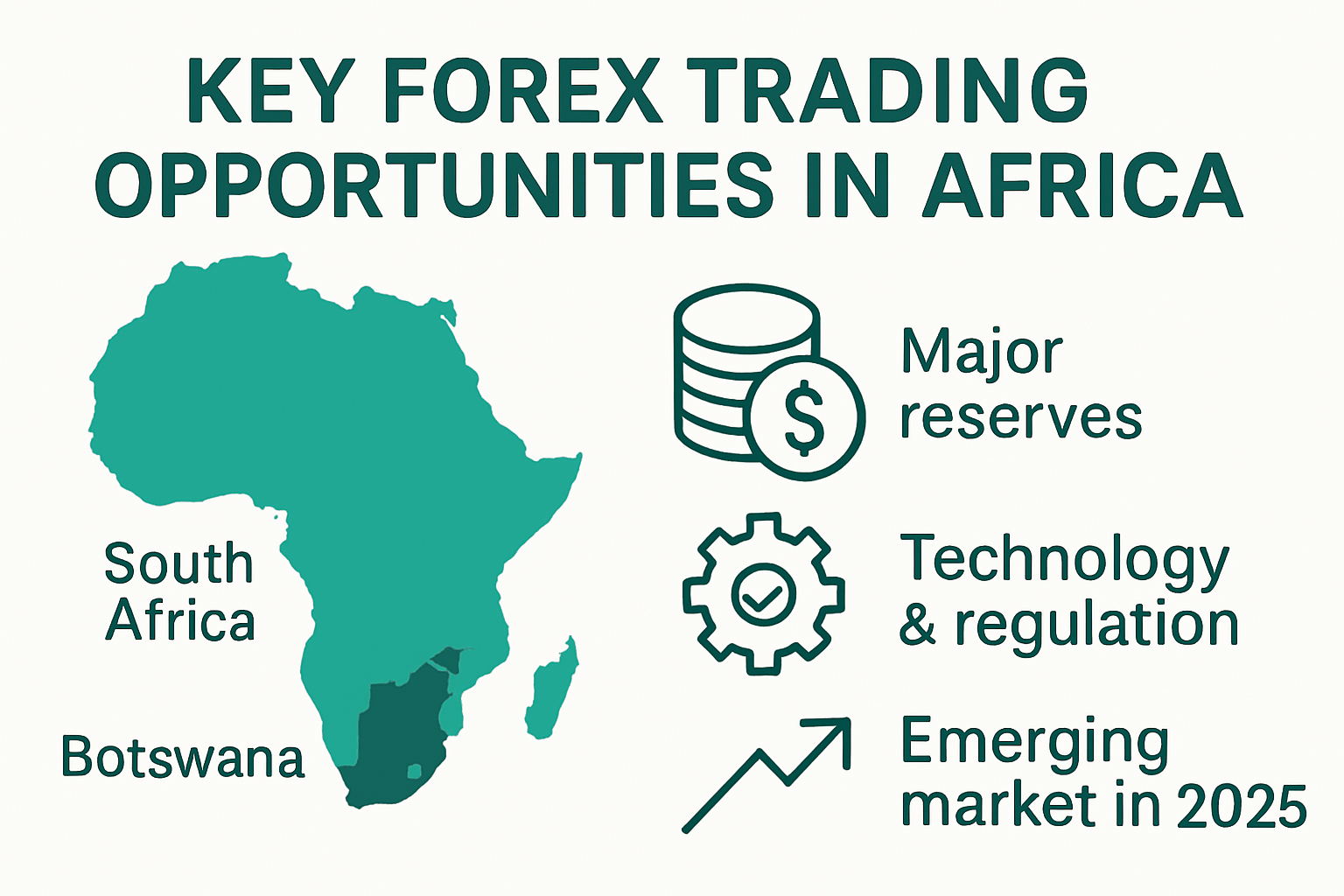
Current Forex Landscape in Africa
The forex market in Africa represents a dynamic and evolving financial ecosystem with significant potential for traders and investors. As of 2025, the continent experiences complex economic shifts that create unique trading opportunities, particularly in key markets like South Africa and Botswana.
Economic Dynamics and Currency Movements
Africa’s forex landscape is characterized by substantial volatility and emerging market potential. South Africa’s foreign exchange reserves reached a remarkable $68.116 billion in May 2025, signaling strong economic fundamentals and increased investor confidence. This substantial reserve indicates potential stability for the south african rand (ZAR) and creates interesting trading scenarios for forex participants.
Botswana presents another intriguing market segment. Despite experiencing an economic contraction of 3.3% in 2024, analysts predict a recovery trajectory from 2025 onward, driven by anticipated improvements in diamond trading and government economic interventions. These macroeconomic factors directly influence currency valuation and present strategic forex opportunities.
Regulatory Environment and Trading Potential
The regulatory frameworks in African forex markets have become increasingly sophisticated. South Africa, in particular, maintains robust financial oversight through institutions like the Financial Sector Conduct Authority (FSCA), which provides traders with enhanced protection and transparent market conditions. These regulatory environments create a more stable and predictable trading ecosystem.
Traders exploring forex opportunities in Africa must understand the nuanced interplay between global economic trends and local market dynamics. Factors such as commodity prices, international trade relationships, and domestic economic policies significantly impact currency valuations. The south african rand and botswana pula demonstrate particular sensitivity to these complex economic interactions.
For traders seeking comprehensive guidance in navigating these intricate markets, exploring professional forex training can provide crucial insights and strategic approaches tailored to African market conditions. Understanding local economic indicators and global forex trends becomes paramount in developing successful trading strategies.
The current forex landscape in Africa represents a compelling blend of challenges and opportunities. Sophisticated traders recognize that success requires deep market understanding, continuous learning, and adaptive strategies that respond to the continent’s unique economic rhythms.

Top Opportunities for South African and Botswana Traders
The forex trading landscape in South Africa and Botswana offers unprecedented opportunities for traders willing to leverage emerging market dynamics and technological innovations. As we move through 2025, strategic traders can capitalize on multiple avenues for potential growth and financial success.
Technological Innovation and Trading Platforms
Technological advancements are revolutionizing forex trading in the region. Research from itweb.co.za highlights the rapid development of machine learning and algorithmic trading tools that provide traders with sophisticated market analysis capabilities. These technologies enable real-time data processing, automated trade execution, and advanced risk management strategies.
Traders in South Africa and Botswana now have access to cutting-edge platforms that offer:
- Advanced Analytics: Machine learning algorithms that predict market trends
- Automated Trading: Systems that execute trades based on predefined parameters
- Risk Management: Sophisticated tools that help minimize potential losses
Regulatory Opportunities and Market Transparency
The regulatory environment in both countries creates a stable trading ecosystem. According to africabrokers.net, Botswana’s Non-Bank Financial Institutions Regulatory Authority (NBFIRA) provides a structured framework that ensures market transparency and trader protection. This regulatory approach attracts international investors and creates a more secure trading environment.
Key regulatory advantages include:
- Transparent Licensing: Clear requirements for forex trading operations
- Investor Protection: Robust mechanisms to safeguard trader interests
- Compliance Standards: Internationally recognized financial regulations
Emerging Market Currency Dynamics
Both South Africa and Botswana present unique forex trading opportunities driven by complex economic interactions. The south african rand and botswana pula demonstrate significant potential for traders who understand local and global economic trends. Commodity price fluctuations, international trade relationships, and domestic economic policies create dynamic trading scenarios.
For traders seeking to develop comprehensive strategies, professional forex training can provide crucial insights into navigating these intricate markets. Understanding the nuanced economic landscape becomes essential for successful trading.
The forex opportunities in Africa are not just about potential profits but about developing sophisticated trading skills that adapt to rapidly changing global financial environments. Successful traders will be those who combine technological innovation, regulatory understanding, and deep market insights.
To help readers better compare the key opportunities for traders in South Africa and Botswana, the table below summarises the main features available in each market.
| Opportunity Area | South Africa Key Features | Botswana Key Features |
|---|---|---|
| Technological Platforms | Access to advanced machine learning and algorithmic trading tools | Growing adoption of modern trading technology |
| Regulatory Framework | FSCA regulates for robust investor protection and transparency | NBFIRA offers structured, transparent licensing and investor protection |
| Market Transparency | High: Transparent, regulated, and accessible | Improving: International compliance and clearer frameworks |
| Currency Volatility/Opportunity | ZAR shows high volatility, sensitive to global changes | Economic recovery and commodity trades impact pula trading |
| Investor Protection | Strong: regulatory mechanisms support traders | Strong: regulations safeguard traders |
| Compliance Requirements | Aligned to international standards with high compliance expectations | Internationally recognised compliance standards enforced |
Risks and Challenges in Forex Trading
Forex trading in South Africa and Botswana presents a complex landscape of potential opportunities and significant challenges. Understanding these risks becomes crucial for traders seeking sustainable success in the volatile emerging market environment.
Market Volatility and Economic Uncertainty
Research from the International Monetary Fund highlights the south african rand’s exceptional volatility, primarily driven by external economic shocks. The rand functions as an emerging market proxy, making it particularly sensitive to global financial fluctuations. Traders must develop robust risk management strategies that account for sudden currency value shifts and unpredictable market movements.
Key volatility factors include:
- Global commodity price fluctuations
- International trade dynamics
- Geopolitical events affecting emerging markets
Regulatory and Systemic Financial Challenges
Financial system research reveals significant challenges in the regional financial ecosystem. The South African Reserve Bank (SARB) has been implementing critical reforms to enhance financial system stability, including establishing new resolution powers and introducing a deposit insurance scheme. These developments reflect the complex regulatory environment traders must navigate.
Systemic challenges include:
- High market concentration
- Elevated entry barriers for new traders
- Complex regulatory compliance requirements
Technological and Operational Risks
Modern forex trading introduces sophisticated technological risks alongside traditional market uncertainties. Algorithmic trading, while offering advanced analytical capabilities, also presents potential vulnerabilities such as system failures, cybersecurity threats, and algorithmic bias. Traders must remain vigilant and continuously update their technological infrastructure.
For traders seeking comprehensive risk management strategies, professional forex training can provide essential insights into navigating these complex challenges. Understanding the intricate balance between technological innovation and risk mitigation becomes paramount for sustainable trading success.
Successful forex trading in Africa requires more than technical skills. It demands a holistic approach that integrates deep market understanding, technological adaptability, and robust risk management strategies. Traders who recognize and proactively address these challenges position themselves for potential long-term success in this dynamic financial landscape.
To clearly outline the major categories of risks and challenges for forex traders in South Africa and Botswana, refer to the table below.
| Risk/Challenge Category | Key Issues/Factors |
|---|---|
| Market Volatility | Commodity price swings, trade dynamics, geopolitical shocks |
| Systemic Financial Risks | High market concentration, entry barriers, complex regulations |
| Technological Risks | Algorithmic failures, cybersecurity threats, system and infrastructure limits |
| Regulatory Challenges | Navigating evolving rules, compliance burdens, cross-border complexities |
Future Trends Shaping Forex in 2025
The forex landscape in Africa is undergoing transformative changes in 2025, driven by technological innovations, economic shifts, and global market dynamics. Traders and investors must adapt to an increasingly complex and interconnected financial environment.
Monetary Policy and Economic Projections
According to the African Development Bank, South Africa’s economic outlook presents intriguing forex opportunities. The projected GDP growth of 1.3% in 2025, combined with an expected inflation moderation to 4.8%, creates a nuanced trading environment. Research from Coface suggests the South African Reserve Bank will likely implement a cautious monetary policy, with potential rate cuts ranging between one to two, stabilizing around 7.0–7.25%.
Key economic indicators suggest:
- Gradual Economic Recovery: Slow but steady growth trajectory
- Inflation Stabilization: Controlled inflationary pressures
- Monetary Policy Flexibility: Strategic interest rate management
To help visualise the forecasted economic climate and monetary policy projections for South Africa in 2025, the following table summarises the major statistics discussed.
| Economic Indicator | 2025 Outlook/Value |
|---|---|
| Foreign Exchange Reserves | $68.116 billion |
| Projected GDP Growth | 1.3% |
| Expected Inflation | 4.8% |
| Policy Interest Rates | 7.0–7.25% (after 1–2 projected rate cuts) |
Technological Disruption and Trading Platforms
Digital transformation continues to revolutionize forex trading in South Africa and Botswana. Emerging technologies such as artificial intelligence, blockchain, and advanced machine learning algorithms are reshaping trading strategies. These technologies offer unprecedented market analysis capabilities, real-time risk assessment, and automated trading mechanisms.
Significant technological trends include:
- AI-Driven Predictive Analytics: Advanced market trend forecasting
- Blockchain Integration: Enhanced transaction transparency
- Automated Trading Systems: Sophisticated algorithmic trading platforms
Regulatory Evolution and Market Accessibility
Regulatory frameworks are becoming more sophisticated, creating a more transparent and secure trading environment. Governments and financial authorities in South Africa and Botswana are implementing progressive regulations that balance investor protection with market innovation. This approach attracts international investors and promotes a more stable forex ecosystem.
For traders seeking to stay ahead of these complex market dynamics, professional forex training can provide critical insights into emerging trends and strategic approaches. Understanding the intricate interplay between technological innovation, regulatory changes, and economic shifts becomes essential for successful trading.
The future of forex trading in Africa is not just about technological advancement but about developing adaptive strategies that respond to the continent’s unique economic landscape. Successful traders will be those who combine deep market understanding, technological proficiency, and strategic flexibility.
Frequently Asked Questions
What are the current forex opportunities in South Africa for 2025?
South Africa’s foreign exchange reserves reached $68.116 billion in May 2025, indicating stability and potential trading opportunities in the forex market, especially for the rand (ZAR). Traders can leverage technological advancements and regulatory improvements to navigate this landscape.
How does the forex market in Botswana differ from South Africa in 2025?
Botswana’s economy is set to recover from an economic contraction in 2024, presenting unique trading opportunities for the pula. Traders should focus on developments in diamond trading and government economic interventions that will influence currency valuation.
What technological innovations are impacting forex trading in South Africa and Botswana?
In 2025, machine learning, algorithmic trading, and advanced analytics are revolutionizing forex trading. These technologies allow for enhanced market analysis, automated trading, and improved risk management, offering traders a competitive edge.
What risks should traders be aware of in the African forex market?
Traders in Africa should be cautious of market volatility driven by global economic factors, regulatory challenges, and technological risks. Understanding these risks and implementing robust risk management strategies is essential for success.
Ready to Master Forex in an Unpredictable African Market?
Navigating the forex market in South Africa and Botswana can feel like trying to stay afloat in turbulent waters. The article highlighted how sudden economic shifts, volatile currencies like the rand and pula, and rapidly changing regulations make trading risky and complex for both new and experienced traders. Without the right guidance, it’s easy to fall behind on the latest strategies or miss out on fresh opportunities shaped by new technologies and local market conditions.

You do not have to face these trading challenges alone. With CTFX School of Trading, you will get step-by-step mentoring that simplifies forex concepts, teaches advanced strategies specific to the African context, and arms you with practical tools to manage volatility and risk. Do not let uncertainty hold you back. Act now to gain proven trading expertise, improve your confidence, and start building results that last. Visit https://ctfx.co.za to discover our comprehensive course and personal coaching options designed for every trader ready to succeed.
Recommended
- Best Forex Trading Course & Coaching: Cape Town South Africa
- Exclusive Private Forex Course – 1-on-1 Trading Training
- Forex trading course pretoria – SA’s Best Forex Trading Course & Coaching Classes
- Forex trading course johannesburg – SA’s Best Forex Trading Course & Coaching Classes
- Forex trading course durban – SA’s Best Forex Trading Course & Coaching Classes
- Best South African Safari Destinations for 2025 Adventures
