
CTFX Forex Help & Guides, CTFX Forex Tips & Tricks
Trading for Beginners 2025: Guide for South Africa

Jul
Trading in South Africa and Botswana used to be reserved for financial pros with massive capital. Now, things have shifted fast. In 2025, beginners can start trading with as little as R500 and get access to global markets straight from their phones. Most new traders think the hardest part is picking the right stock. Actually, the real game is avoiding emotional traps and rookie mistakes that can wipe out your account within days. Curious how people with zero background are turning small amounts into real results? This could surprise you.
Table of Contents
- Understanding Trading Basics In 2025
- Choosing The Right Broker In Southern Africa
- Essential Strategies For Beginners
- Common Trading Mistakes To Avoid
Quick Summary
| Takeaway | Explanation |
|---|---|
| Understand Trading Technology | Modern trading platforms provide real-time data and analysis tools, making trading accessible to beginners with minimal capital. |
| Choose a Regulated Broker | Prioritize brokers regulated by the FSCA to ensure security, transparency, and investor protection, essential for safeguarding your investments. |
| Implement Strong Risk Management | Utilize strategies like stop-loss orders and proper position sizing to protect your trading capital from significant losses. |
| Develop a Trading Plan | Create a structured trading plan outlining your financial goals, risk tolerance, and trading rules to guide your trading activities effectively. |
| Avoid Emotional Trading | Stay disciplined and avoid impulsive decisions driven by emotions like fear or greed, which can lead to poor financial outcomes. |
Understanding Trading Basics in 2025
Trading in 2025 represents a dynamic landscape of financial opportunities for new investors seeking to build wealth and understand market mechanisms. The financial world continues to evolve rapidly, with technological advancements and global economic shifts creating unprecedented access for beginners looking to enter trading markets.
The Changing Landscape of Trading Technology
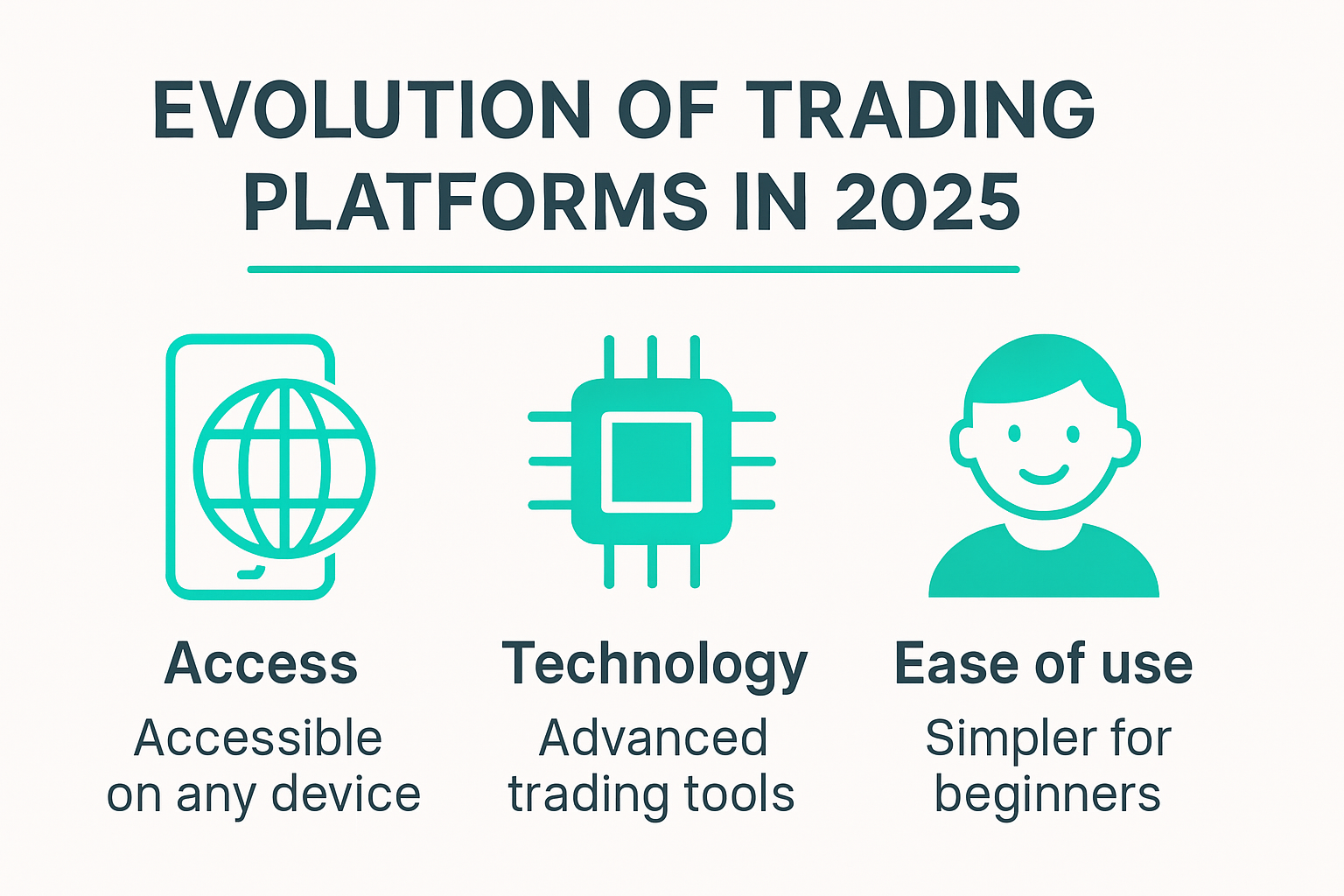
Modern trading platforms have revolutionized how individuals approach financial markets. Advanced technologies now enable traders to access real-time market data, execute trades instantly, and leverage sophisticated analytical tools from their smartphones or personal computers. Learn more about our comprehensive trading insights reveals that the barrier to entry for trading has significantly decreased, making it more accessible to individuals across different economic backgrounds.
The Johannesburg Stock Exchange highlights that digital platforms have transformed trading from a complex professional activity to an opportunity for individual investors. Beginners can now start with minimal capital, access educational resources, and practice trading strategies through simulation tools before committing real funds.
Essential Skills for Modern Trading
Successful trading in 2025 requires more than just financial knowledge. Traders must develop a combination of technical skills, emotional intelligence, and strategic thinking. Key competencies include:
- Market Analysis: Understanding fundamental and technical analysis techniques
- Risk Management: Developing robust strategies to protect investment capital
- Technological Literacy: Navigating digital trading platforms and interpreting complex data sets
The South African government’s economic reports emphasize the importance of continuous learning and adaptability in financial markets. Traders who remain informed about global economic trends, technological innovations, and regulatory changes will be better positioned to make strategic investment decisions.
Navigating Regional Trading Opportunities
For traders in South Africa and Botswana, the African Continental Free Trade Area (AfCFTA) presents exciting new possibilities. According to trade development research, the agreement aims to reduce trade barriers and create more interconnected financial markets across the continent.
Beginners should focus on understanding local market dynamics, regulatory environments, and emerging economic sectors. This approach allows new traders to develop nuanced strategies that leverage regional economic strengths while managing potential risks effectively.
Trading in 2025 demands a holistic approach. Successful traders combine technological tools, continuous education, strategic thinking, and an understanding of broader economic contexts. By embracing these principles, beginners can transform trading from a complex challenge into an accessible pathway for financial growth and personal development.
Choosing the Right Broker in Southern Africa

Selecting the right broker is a critical decision for traders in Southern Africa that can significantly impact investment success. The financial landscape in 2025 offers numerous options, but understanding how to evaluate and choose a broker requires careful consideration of multiple factors.
Regulatory Compliance and Security
Traders must prioritize brokers regulated by the Financial Sector Conduct Authority (FSCA) in South Africa. Regulatory compliance ensures fundamental protections for investors, including transparent trading practices, secure fund management, and ethical operational standards. According to market research, a regulated broker provides critical safeguards that protect traders from potential financial misconduct.
Key regulatory considerations include:
- Fund Segregation: Ensuring client funds are kept separate from operational accounts
- Transparent Reporting: Regular financial disclosures and performance documentation
- Investor Protection: Mechanisms for dispute resolution and financial compensation
Below is a summary table highlighting the key regulatory features to consider when selecting a broker:
| Regulatory Feature | Description | Importance for Beginners |
|---|---|---|
| Fund Segregation | Client funds kept separate from broker’s operational accounts | Protects your funds from misuse |
| Transparent Reporting | Regular financial statements and disclosures | Enhances trust and accountability |
| Investor Protection | Dispute resolution & compensation mechanisms | Safeguards your investment capital |
Evaluating Trading Platforms and Tools
Modern trading requires sophisticated technological infrastructure. Reliable trading platforms like MetaTrader 4 and MetaTrader 5 offer advanced charting tools, automated trading capabilities, and seamless execution. When selecting a broker, traders should assess the following technological features:
- Platform Compatibility: Support across multiple devices (desktop, mobile, web)
- Analytical Tools: Advanced charting, technical indicators, and real-time market data
- Execution Speed: Minimal latency and reliable trade execution
Explore our comprehensive trading insights to understand how technological capabilities can enhance your trading experience.
Cost Structure and Trading Conditions
Financial considerations play a crucial role in broker selection. Detailed market analysis emphasizes the importance of understanding a broker’s cost structure. Traders should carefully evaluate:
- Spread Rates: Differences between buy and sell prices
- Commission Structures: Transparent fee models
- Overnight Financing Costs: Potential charges for holding positions
The right broker balances competitive pricing with robust trading infrastructure. Traders in South Africa and Botswana should conduct thorough comparisons, considering not just cost, but overall value proposition.
Choosing a broker is more than a transactional decision. It represents a partnership that can significantly influence your trading journey. By prioritizing regulatory compliance, technological capability, and transparent financial terms, traders can establish a strong foundation for their investment strategies in 2025 and beyond.
Essential Strategies for Beginners
Navigating the complex world of trading requires more than just enthusiasm. Beginners must develop strategic approaches that balance potential rewards with calculated risk management. In 2025, successful trading demands a comprehensive understanding of market dynamics and disciplined execution.
Understanding Market Trends and Analysis
Trend trading represents a fundamental strategy for new traders. Market research from Johannesburg indicates that identifying market direction is crucial for making informed trading decisions. By recognizing whether a market is moving upward or downward, traders can align their strategies with existing momentum.
Key elements of trend analysis include:
- Technical Indicators: Using moving averages and trend lines
- Price Action: Analyzing historical price movements
- Market Sentiment: Understanding broader economic contexts
Explore our comprehensive trading insights to develop a nuanced approach to market trend identification.
Risk Management Techniques
Protecting trading capital is paramount for long-term success. According to financial analysis, implementing robust risk management strategies can significantly improve a trader’s sustainability.
Critical risk management principles include:
- Stop-Loss Orders: Automatically closing trades to limit potential losses
- Position Sizing: Risking only 1-2% of total portfolio on a single trade
- Diversification: Spreading investments across multiple markets and assets
Below is a table summarising essential risk management techniques for new traders:
| Technique | What It Does | Why It Matters for Beginners |
|---|---|---|
| Stop-Loss Orders | Closes your trade at a pre-set loss limit | Prevents devastating, uncontrolled loss |
| Position Sizing | Limits risk per trade to a small % of your capital | Preserves long-term trading ability |
| Diversification | Invest in different assets/markets, not just one | Reduces risk exposure from single trade |
Professional traders emphasize that effective risk management is not about eliminating risk entirely, but about controlling and minimizing potential negative outcomes.
Developing a Comprehensive Trading Plan
A structured trading plan transforms random trading into a systematic approach. Expert recommendations suggest that a well-crafted plan should address several critical components:
- Clear Financial Goals: Defining short and long-term objectives
- Risk Tolerance: Understanding personal financial limits
- Entry and Exit Strategies: Establishing precise trade execution rules
- Performance Tracking: Regularly reviewing and adjusting strategies
For traders in South Africa and Botswana, this plan must account for local market conditions, including specific trading hours and regional economic factors. The Johannesburg Stock Exchange (JSE) trading hours and local currency pair dynamics play a significant role in strategy development.
Successful trading is a journey of continuous learning and adaptation. Beginners who approach the market with discipline, strategic thinking, and a commitment to ongoing education will be best positioned to navigate the complex financial landscapes of 2025. Remember that no strategy guarantees success, but a methodical approach can significantly improve your chances of achieving consistent trading performance.
Common Trading Mistakes to Avoid
Trading represents a complex journey where knowledge and discipline determine success. For beginners in South Africa and Botswana, understanding potential pitfalls is as crucial as learning successful strategies. Recognizing and avoiding common mistakes can significantly improve trading outcomes and protect financial investments.
Emotional Decision Making and Psychological Traps
Emotional trading can devastate investment portfolios. Research from Holborn Assets reveals that fear and greed are primary drivers of poor trading decisions. Traders often make impulsive choices during market volatility, buying high during booms and panic-selling during downturns.
Key emotional traps include:
- Panic Selling: Reacting hastily to short-term market fluctuations
- Overconfidence: Believing past successes guarantee future performance
- Confirmation Bias: Seeking information that confirms existing beliefs
Explore our comprehensive trading insights to develop emotional resilience in trading.
Overtrading and Risk Mismanagement
Financial analysis from local sources highlights overtrading as a critical error for new traders. Excessive trading increases transaction costs and exposes investors to unnecessary risks. Beginners often mistakenly believe more trades equate to higher potential profits.
Critical risk management considerations:
- Transaction Cost Awareness: Understanding how frequent trades erode potential gains
- Position Sizing: Limiting exposure on individual trades
- Strategic Patience: Waiting for high-probability trading opportunities
Lack of Strategic Planning
Market research emphasizes that trading without a comprehensive plan is a fundamental mistake. A structured approach provides clear guidelines for investment decisions, risk tolerance, and performance evaluation.
Essential elements of a robust trading plan include:
- Clear Investment Goals: Defining specific, measurable objectives
- Risk Tolerance Assessment: Understanding personal financial limits
- Regular Performance Review: Systematically evaluating trading strategies
For traders in the Southern African region, understanding local market dynamics is crucial. The Johannesburg Stock Exchange and regional economic factors present unique opportunities and challenges that require tailored strategic approaches.
Successful trading is not about eliminating mistakes entirely but learning from them systematically. Traders who approach the market with self-awareness, disciplined strategies, and continuous learning will be better positioned to navigate the complex financial landscapes of 2025 and beyond. Remember that every experienced trader was once a beginner who committed and learned from their mistakes.
Frequently Asked Questions
What is the minimum amount needed to start trading in South Africa and Botswana in 2025?
In 2025, beginners can start trading with as little as R500, making it accessible to many individuals looking to enter the trading market.
How can I choose a reliable trading broker in Southern Africa?
To choose a reliable broker, ensure they are regulated by the Financial Sector Conduct Authority (FSCA), prioritize transparency, and evaluate their trading platforms, tools, and cost structures before making a decision.
What are some essential trading strategies for beginners?
Beginners should focus on understanding market trends, implementing strong risk management techniques, and developing a comprehensive trading plan to guide their trading activities effectively.
What common mistakes should new traders avoid?
New traders should avoid emotional decision-making, overtrading, and the lack of a strategic trading plan. Staying disciplined and informed can help mitigate these common pitfalls.
Ready to Start Trading Smarter Right Here in South Africa?
You have just seen how overwhelming it can get for beginners stepping into the world of trading. Figuring out reliable brokers, building solid risk management, and designing a plan that survives real market emotions are not just buzzwords. For many new traders, these hurdles mean the difference between early account losses and sustainable profits. But you do not have to face these challenges alone. CTFX School of Trading is run by South Africans who truly understand the local markets and your unique journey as a new trader.

You do not have to settle for generic advice when practical South African-focused solutions are available. Visit our site to see how our simple yet comprehensive CTFX courses and coaching programmes can help you grasp trading basics, avoid costly rookie mistakes, and build the emotional strength highlighted in your trading guide. If you are serious about making your trading journey in 2025 a success, take the first step now by exploring our full programme. Your trading breakthrough starts with knowledge and genuine mentorship.
Recommended
- Best Forex Trading Course & Coaching: Cape Town South Africa
- Forex trading course pretoria – SA’s Best Forex Trading Course & Coaching Classes
- Exclusive Private Forex Course – 1-on-1 Trading Training
- Home – SA’s Best Forex Trading Course & Coaching Classes
- Exclusive Private Forex Course – 1-on-1 Trading Training
- Forex trading course johannesburg – SA’s Best Forex Trading Course & Coaching Classes
