
CTFX Forex Help & Guides, CTFX Forex Tips & Tricks
Scalping in Forex: Strategies for South Africa 2025

Oct
Forex scalping is taking South Africa and Botswana by storm. Traders are jumping in to grab profits from even the smallest price moves, with some platforms now delivering millisecond execution speeds and AI-powered strategies that achieve up to 76% directional accuracy on five-minute trades. Most newcomers think scalping is all about luck or lightning-fast fingers. Turns out, the biggest difference comes down to your trading tech and your understanding of local regulations. That changes the whole game.
Table of Contents
- What Is Scalping In Forex Trading?
- Popular Strategies For Forex Scalping
- Best Tools And Platforms For Southern Africa
- Risk Management And Local Regulations
Quick Summary
| Takeaway | Explanation |
|---|---|
| Understanding Scalping | Scalping is a fast-paced trading strategy in forex that focuses on making profits from small price movements, typically within a few minutes. Success in scalping requires rapid decision-making and advanced trading technology. |
| Technical Requirements | Traders must have high-speed internet, low-latency platforms, and the ability to manage stress effectively. Maintaining discipline and executing precise entry and exit strategies are crucial for success. |
| Platform Selection | Choose trading platforms with low latency, advanced charting tools, and integrated risk management features. Adapting to technology-driven solutions can significantly enhance trading performance. |
| Regulatory Awareness | Understand the regulatory frameworks in South Africa and Botswana. South Africa has a stringent regulatory environment compared to Botswana, necessitating local compliance for brokers. |
| Risk Management Strategies | Implement risk management protocols such as position sizing and stop-loss mechanisms. Continuous education on market dynamics is essential for effective trading and risk mitigation. |
What Is Scalping in Forex Trading?
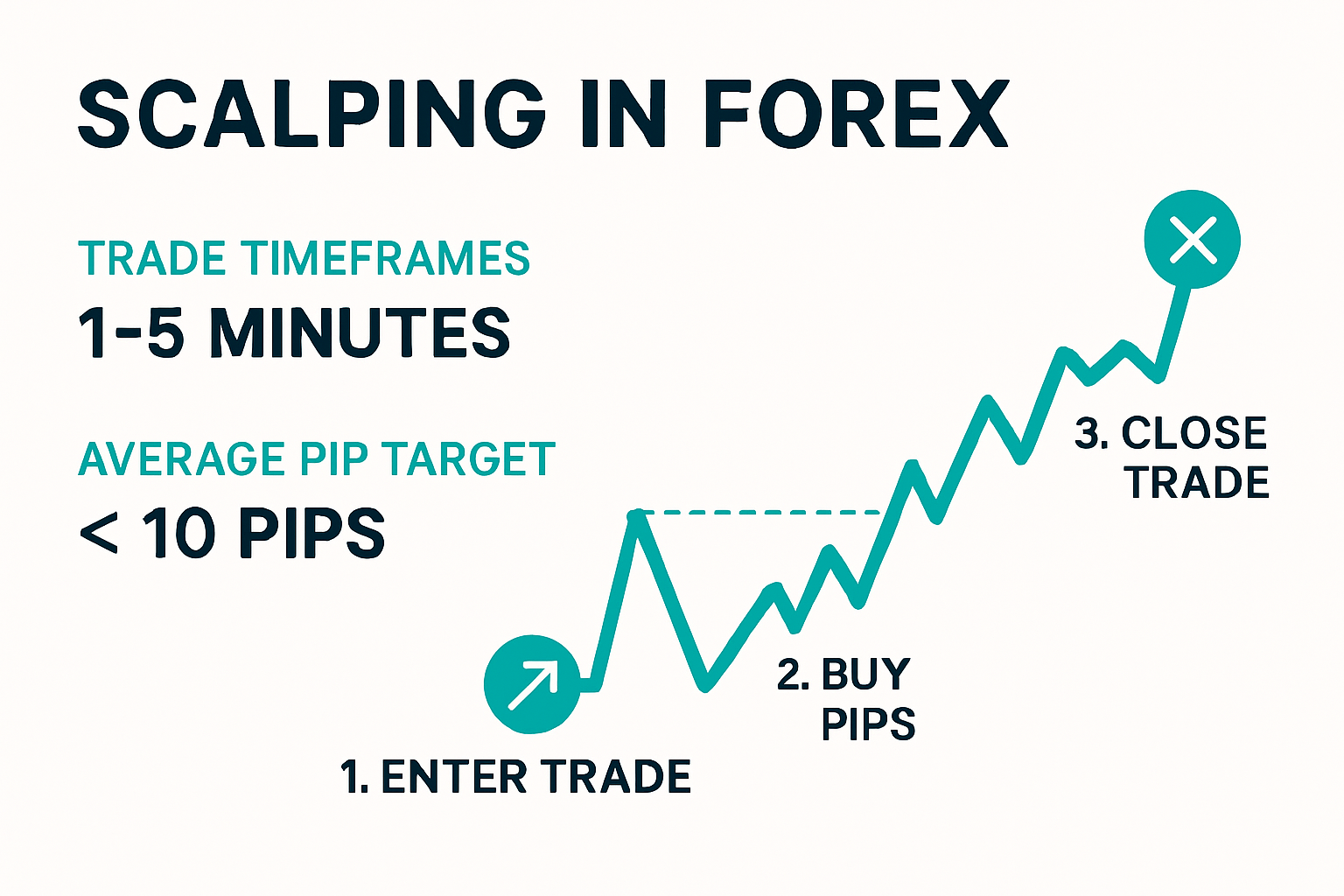
Scalping in forex trading represents an aggressive and fast-paced trading strategy designed to capture minimal price movements within extremely short timeframes. Investopedia defines this approach as a day trading style where traders buy or sell currency pairs with remarkably brief holding periods to generate a series of quick, successive profits.
Core Principles of Forex Scalping
Fundamentally, forex scalping operates on the principle of executing numerous trades throughout a trading session, targeting small price increments typically ranging between five to twenty pips per transaction. Unlike traditional trading strategies that seek substantial price movements, scalpers capitalize on minute market fluctuations. BabyPips highlights that this strategy relies extensively on technical analysis, real-time market data, and sophisticated trading platforms to identify and exploit short-term price variations.
Scalpers essentially function like market makers, strategically positioning themselves to profit from the bid-ask spread. Their objective is not to make significant gains on individual trades but to accumulate profits through high-frequency trading. By increasing position sizes, traders can magnify potential returns from these minimal price changes.
Technical Requirements and Trader Characteristics
Successful forex scalping demands specific technical and psychological attributes. Traders must possess:
- Rapid Decision Making: The ability to analyze market conditions and execute trades within seconds
- Advanced Trading Technology: High-speed internet connections and low-latency trading platforms
- Exceptional Discipline: Strict adherence to predefined entry and exit strategies
- Emotional Control: Capacity to manage stress and make rational decisions under intense market pressure
Moreover, Wikipedia emphasizes that scalping exploits small currency price changes by acting similarly to market specialists. The core mechanism involves purchasing at the bid price and selling at the ask price, generating profit from the bid-ask difference even when market prices remain relatively stable.
Traders considering scalping must recognize it is not a passive investment strategy. It requires constant market monitoring, quick reflexes, and a comprehensive understanding of technical indicators. While potentially lucrative, scalping also carries significant risks due to its high-frequency nature and the minimal margin for error.
Understanding these fundamental aspects provides traders with insights into the complex world of forex scalping, enabling more informed decisions about whether this intense trading approach aligns with their individual trading goals and risk tolerance.

Popular Strategies for Forex Scalping
Forex scalping strategies represent sophisticated approaches designed to capitalize on minute market movements, requiring precision and advanced technical understanding. Research from the Journal of Big Data reveals that modern scalping techniques increasingly incorporate machine learning technologies like Long Short-Term Memory (LSTM) networks to analyze complex market dynamics.
Technical Indicator-Based Scalping Strategies
Traders employ multiple technical indicator-based strategies to execute successful scalping trades. The Moving Average Convergence Divergence (MACD) strategy remains particularly popular, allowing traders to identify rapid trend changes within short timeframes. Scalpers utilizing this method closely monitor exponential moving averages to detect potential entry and exit points with minimal lag.
Another prominent approach involves the Relative Strength Index (RSI) scalping strategy. Arxiv’s research paper indicates that event-driven features integrated with technical indicators can significantly improve predictive accuracy for short-term price movements. Traders using RSI focus on identifying overbought or oversold market conditions, executing trades when specific momentum thresholds are crossed.
Advanced Algorithmic Scalping Techniques
Emergent technological advancements have transformed forex scalping through sophisticated algorithmic approaches. Advanced research demonstrates hybrid models combining wavelet transforms, attention-based recurrent neural networks, and autoregressive integrated moving average techniques can achieve directional accuracy approaching 76% on five-minute trading intervals.
These algorithmic strategies leverage machine learning to:
- Predict Short-Term Price Movements: Utilizing complex neural network architectures
- Identify Market Inefficiencies: Detecting microsecond trading opportunities
- Manage Risk Dynamically: Implementing automated stop-loss and take-profit mechanisms
Psychological and Risk Management Considerations
Successful scalping extends beyond technical strategies and requires robust psychological preparation. Traders must develop:
- Exceptional emotional discipline
- Rapid decision-making capabilities
- Strict risk management protocols
- Advanced technological infrastructure
While scalping offers potential for consistent profits, it simultaneously presents significant risks. Traders must maintain unwavering focus, execute trades with surgical precision, and understand that even minor execution errors can substantially impact overall performance.
For traders seeking deeper insights into advanced trading methodologies, our comprehensive trading strategies guide provides additional context on navigating complex market environments.
Ultimately, forex scalping demands a combination of technological sophistication, psychological resilience, and continuous learning. Traders committed to mastering these intricate strategies can potentially transform short-term market fluctuations into consistent trading opportunities.
To help clarify the most popular technical and algorithmic approaches, the following table compares key scalping strategies and their main features:
| Strategy Type | Main Tools/Indicators | Key Focus |
|---|---|---|
| MACD-Based | Moving averages, MACD | Rapid trend identification |
| RSI-Based | RSI, event-driven features | Overbought/oversold conditions |
| Algorithmic Machine Learning | LSTM, wavelet transforms, neural networks | Predicting short-term price moves |
| Hybrid Algorithmic (ARIMA+Attention) | ARIMA, attention-based RNN | Directional accuracy, trade automation |
Best Tools and Platforms for Southern Africa
Forex scalping in Southern Africa demands sophisticated technological infrastructure to navigate complex market dynamics. Research from arxiv.org analyzing trading strategies on the Johannesburg Stock Exchange highlights the critical importance of selecting robust platforms that can execute trades with precision and speed.
Trading Platform Characteristics
Ideal scalping platforms for traders in South Africa and Botswana must possess several key characteristics. These include:
- Ultra-Low Latency: Millisecond execution speeds
- Advanced Charting Tools: Real-time technical analysis capabilities
- Multiple Asset Support: Capability to trade across forex, commodities, and synthetic instruments
- Risk Management Features: Integrated stop-loss and take-profit mechanisms
The most effective platforms incorporate machine learning technologies to enhance trading performance. Deep learning research demonstrates that advanced algorithmic platforms can significantly improve forecasting accuracy by analyzing complex market patterns.
Technological Requirements for Scalping Success
Successful scalping platforms must integrate cutting-edge technological capabilities. The cooperative multi-agent reinforcement learning framework suggests that next-generation trading platforms will leverage artificial intelligence to simulate and optimize trading strategies.
Key technological requirements include:
- High-speed internet connectivity
- Multi-screen trading setups
- Advanced computational hardware
- Secure and stable trading environments
Traders in Southern Africa must prioritize platforms offering:
- Low Spread Offerings: Minimal transaction costs
- Regulated Trading Environments: Compliance with local financial regulations
- Responsive Customer Support: Immediate technical assistance
Risk Management and Platform Selection
Selecting the right trading platform involves comprehensive evaluation beyond mere technical specifications. Traders must consider:
- Regulatory compliance
- Historical platform reliability
- User interface intuitiveness
- Cost-effectiveness of trading
Our comprehensive trading strategies guide provides deeper insights into platform selection and optimization strategies for Southern African traders.
Ultimately, successful scalping requires a symbiotic relationship between trader expertise and technological infrastructure. Platforms that combine advanced algorithmic capabilities with user-friendly interfaces will likely dominate the Southern African forex trading landscape in 2025 and beyond.
Traders must remain adaptable, continuously updating their technological toolkit to maintain a competitive edge in the rapidly evolving forex market. The most successful scalpers will be those who combine technological sophistication with strategic insight and disciplined execution.
The table below summarises essential platform features and technological requirements for scalping success in Southern Africa:
| Platform Feature | Technological Requirement | Importance for Scalping |
|---|---|---|
| Ultra-low latency | High-speed internet, low-latency servers | Rapid, precise trade execution |
| Advanced charting tools | Real-time data, multi-screen setups | Fast technical analysis |
| Integrated risk controls | Automated stop-loss/take-profit | Protect margins and limit losses |
| AI machine learning | Algorithmic trading infrastructure | Enhanced short-term price forecasting |
| Local regulation | FSCA compliance, secure processing | Legal protection & market integrity |
Risk Management and Local Regulations
Forex scalping in Southern Africa requires a nuanced understanding of complex regulatory landscapes and sophisticated risk management strategies. FX Scouts highlights the critical role of regulatory frameworks in protecting traders and maintaining market integrity across South Africa and Botswana.
Regulatory Frameworks in Southern Africa
South Africa presents a more structured regulatory environment compared to Botswana. The Financial Sector Conduct Authority (FSCA) mandates stringent requirements for forex brokers, including:
- Local office presence
- At least one resident director
- Professional indemnity insurance
- Transparent disclosure of trading conditions
In contrast, Botswana’s forex trading landscape remains less regulated. While forex trading is legal, there is no dedicated local regulatory body overseeing online currency trading. Botswanan traders typically engage with international brokers regulated by recognized authorities like the UK’s Financial Conduct Authority (FCA).
To give a clearer overview, the following table compares the regulatory requirements for forex trading in South Africa and Botswana:
| Aspect | South Africa (FSCA) | Botswana |
|---|---|---|
| Local regulatory authority | Yes (FSCA) | No (reliant on foreign regulators) |
| Broker local office requirement | Yes | No |
| Resident director required | Yes | No |
| Professional indemnity insurance | Yes | No |
| Transparency/Disclosure | Mandatory | Not mandated |
| Forex trading legality | Legal & regulated | Legal, limited regulation |
Risk Management Strategies for Scalpers
Effective risk management goes beyond regulatory compliance. Successful scalpers must implement comprehensive strategies to protect their investments:
- Position Sizing: Limiting individual trade exposure to 1-2% of total trading capital
- Stop-Loss Implementation: Automatic exit mechanisms to prevent significant losses
- Diversification: Spreading risk across multiple currency pairs
- Continuous Education: Staying updated on market dynamics and trading techniques
The FSCA encourages traders to develop robust risk management protocols. This includes maintaining detailed trading journals, understanding leverage implications, and developing disciplined trading psychology.
Technology and Compliance
Modern scalping requires seamless integration of technological tools with regulatory requirements. Traders must select platforms that offer:
- Real-time compliance monitoring
- Automated risk assessment tools
- Secure transaction recording
- Transparent reporting mechanisms
Our comprehensive trading strategies guide provides in-depth insights into navigating the complex regulatory environment while maintaining optimal trading performance.
Ultimately, successful forex scalping in Southern Africa demands a holistic approach. Traders must balance technical expertise, regulatory awareness, and disciplined risk management. By understanding local regulatory nuances and implementing sophisticated risk mitigation strategies, scalpers can create a sustainable and compliant trading ecosystem.
The evolving forex landscape requires continuous adaptation. Traders who remain informed, technologically equipped, and regulatory-conscious will be best positioned to capitalize on emerging market opportunities while protecting their financial interests.
Frequently Asked Questions
What is Forex scalping?
Forex scalping is a fast-paced trading strategy that focuses on making profits from small price movements in currency pairs, typically executing trades within a few minutes.
What are the key requirements for successful scalping in Forex?
Successful scalping requires high-speed internet, low-latency trading platforms, rapid decision-making skills, and the ability to manage stress effectively.
What strategies are popular for Forex scalping in Southern Africa?
Popular strategies include technical indicator-based methods like MACD and RSI, as well as advanced algorithmic techniques utilizing machine learning to predict short-term price movements.
How does regulation impact Forex scalping in South Africa and Botswana?
South Africa has a more stringent regulatory environment, requiring brokers to meet specific criteria, whereas Botswana has less regulation, relying mostly on international brokers. Understanding these regulations is vital for compliant trading.
Ready to Take Your Scalping to the Next Level in Southern Africa?
You have just learned how rapid decisions, low-latency platforms, and strict discipline are non-negotiable if you want to succeed at forex scalping in South Africa or Botswana. But maybe you are feeling overwhelmed by the technical complexity or unsure how to choose the right strategy for your goals. This is where the CTFX School of Trading steps in. We provide hands-on guidance and straightforward training specifically built for traders facing the exact fast-paced challenges described in this article. Tap into exclusive resources and see how easy learning forex can be with a skilled mentor by your side. If you want to see which course is best for your needs, have a look at our CTFX Course List.

Take the first step towards stress-free scalping and responsible trading. Visit https://www.ctfx.co.za/free and claim access to our FREE resources and expert advice now while the momentum is with you. Make sure you are not trading alone or blind. Guidance is just a click away.
Recommended
- Best Trend Trading Strategies for South Africa and Botswana 2025 – SA’s Best Forex Trading Course & Coaching Classes
- Top Swing Trading Strategies for 2025: South Africa & Botswana – SA’s Best Forex Trading Course & Coaching Classes
- Stock Market for Beginners: Easy Guide for South Africa & Botswana 2025 – SA’s Best Forex Trading Course & Coaching Classes
- Common Forex Scams South Africa: Protect Yourself in 2025 – SA’s Best Forex Trading Course & Coaching Classes
- Master Gold Scalping: Strategies For Rapid Gains
- Marketing from the Arse End of Africa: The Unexpected Frontier – Zoo Digital
